

Pickleball serving rules dictate that serves must be made underhand and from within the designated service area, adding a distinct flavor to the game. Unlike the overhand serves commonly seen in tennis, pickleball serving rules require players to focus on precision and strategic placement, setting the stage for dynamic and engaging gameplay.
In this post, we’ll dive into the intricate world of pickleball serving rules, unraveling the nuances that set them apart from other racquet sports. Whether you’re a newcomer looking to grasp the fundamentals or a seasoned player aiming to refine your serving technique, understanding these rules is essential for mastering the art of serving in pickleball.
Table of Contents
Affiliate Disclaimer
As an Amazon Associate I earn from qualifying purchases. As an affiliate, we also get commissions for purchases made through links on this website from other third parties.
Pickleball Serving Rules: The Foundations
When you step onto a pickleball court, mastering the serve is a fundamental Pickleball skill that sets the tone for your game. In pickleball, every serve must comply with rules that ensure fair play. Here’s what you need to know to ensure your serve is both legal and effective.
Starting the Serve:
- Stand behind the baseline of the court.
- You must call the entire score before initiating the serve.
- The serving motion starts with your arm swinging to hit the ball.
Positioning and Motion:
- Both feet must be behind the baseline and its imaginary extensions on the sides.
- The paddle must make contact with the ball in an upward arc.
- At the point of contact, the highest part of the paddle head must not exceed your wrist level.
Service Court:
- Always ensure the ball lands in the opposing diagonal service court.
- The centerline, sideline, and baseline bound the service court.
- Serve diagonally across the court to the correct service box.
Executing a Legal Serve:
- Your serve must be underhand with your paddle below your waist.
- You must hit the ball in an upward arc without bouncing it first.
- The serve must clear the net without touching it for a legal serve.
You set yourself up for a successful game by adhering to these pickleball serving rules. Remember that practice is key to a consistent and strategic serve, which can be a significant advantage in your pickleball play.
Of course, there is much more to getting started with Pickleball than mastering your serve, so if you’re new to the game, check out my guide to Beginners Pickleball
Service Techniques and Strategies
Mastering your serve in pickleball is essential for setting the stage for every point you play. Your service techniques and Pickleball strategies can give you a significant advantage by applying pressure on your opponents.
Underhand Stroke Mechanics
In pickleball, the serve must be executed with an underhand motion. This means your arm swings in an upward arc, and the paddle head must be below your wrist when contact is made with the ball. Practicing a fluid motion that starts from low to high will help you deliver consistent and legal service. Watch your wrist position; keeping the paddle head below is a technique and a rule.
Paddle and Contact
The point of contact with the ball is crucial. You must hit the ball with an upward motion—it ensures your serve is legal and provides a diverse range of serving options. Use a paddle’s surface effectively to control speed and spin. You’ll want to get a feel for how the ball responds to different contact points on the paddle; this is a foundational skill that will improve all aspects of your pickleball game.
Direction and Placement
Direction and placement should be deliberate in pickleball serving. Aim to serve diagonally across the court into the opponent’s service zone. Developing an accurate and strategic serve can limit your opponent’s return options. Varying serve placement can keep opponents guessing, forcing them to reposition and potentially creating unforced errors. Practice serves both corners of the service zone and aims for depth and precision to keep the opposing team on their toes.
Starting the Game
To commence a pickleball game, the right serving techniques align with the official rules and ensure fair play. Your understanding of the serve’s initiation, the sequence, and the specific double bounce rule is crucial for a proper game start.
Initiating Serve
You start the game with a serve that must be executed below your waist level, using an underhand stroke. The serving team serves from the right service court when their score is even and switches to the left when the score is odd. The serve should diagonally cross the court past the non-volley zone (known as the ‘kitchen’) without touching it.
Serving Sequence
- Doubles: The serving sequence begins with the player on the right-hand court. Your team continues to serve as long as you keep scoring points (
rally scoring). The serve passes to the second player after the first server faults. When your team commits a fault, the serve goes to the opposing team. - Singles: You serve from the right side if your score is even and from the left when it is odd. A fault results in the serve moving to the opponent.
Double Bounce Rule
- The Double Bounce Rule mandates that after the serve, the ball must bounce once before the receiving team may return it, and then it must again bounce once before the serving team hits it, effectively two bounces, before volleys can begin.
- This rule applies to both singles and doubles play and is designed to limit the serving team’s advantage, allowing for longer and more strategic rallies in pickleball.
Serve Rules Specifics
In pickleball, serving is a critical skill tightly regulated by specific rules to maintain fair play. Understanding these rules ensures you’re always on the right side of legal service.
Single Serve Attempt
You get one service attempt per point; you lose your service if you commit a service fault. A successful serve begins with both of your feet behind the baseline and the complete score called out.
Service Faults
Service faults occur if you break the rules during the service. For instance, stepping on the baseline before hitting the ball or failing to meet the proper paddle contact requirements, like striking the ball above waist level, results in a fault and the loss of a serving opportunity.
Drop Serve
A drop serve gives you an alternative serving method where you can let the ball bounce once before serving. This serve must still comply with other rules, like the paddle making contact below the waist, but it’s exempt from the upward arc requirement.
Faults in Serving
Common faults in serving include hitting the ball out of bounds, not clearing the net, or volleying the ball without letting it bounce first. Illegal serves, such as those contacting the ball above the waist or with the paddle head above the wrist at the point of contact, are also faults. Committing any of these results in a loss of serve.
Player Positioning and Readiness
In pickleball, both the serving team’s positions and the receiver’s readiness are crucial before the serve. Proper positioning ensures the game is played fairly and by the rules.
Server and Partner Positions
When serving, you must stand behind the baseline, between the center and the sideline. You must serve diagonally, targeting the opposite service court. Meanwhile, your partner should position themselves in the service court diagonal to you but within the boundaries of the court. This placement avoids faults and sets both of you up for a legal and strategic start to the rally.
Receiver Readiness
Before you serve, ensure the receiver is ready. The receiver signals readiness by not raising a paddle or hand or indicating they are not ready. You must serve within 10 seconds of the score being called. If your opponent is not ready, they must communicate that before the score has been stated; otherwise, you’re free to serve. If the receiver or their partner is not ready and does not signal in time, and a serve is made, it stands as is.
Infractions and Irregularities
Understanding infractions and irregularities in serving is crucial for maintaining the integrity of the game. These violations can lead to faults and penalties that impact the flow and outcome of the match.
Foot Faults
Foot faults occur when you step on or over the baseline or sideline while serving. Your feet must be behind the baseline; you cannot touch it or the court inside the baseline until after hitting the ball. Stepping on the adjacent court’s sideline also constitutes a foot fault. To avoid foot faults, ensure that your feet remain behind the appropriate lines throughout the service motion.
Check out my guide to footwork in Pickleball to help you avoid foot faults and set yourself up for success on the court.
Let Rules
A “let” happens when the ball served touches the net and lands in the correct service court. These serves are not scored and are instead replayed. Continuous lets are allowed without penalty, but variations can exist in different play formats. It’s important to understand that while a serve touching the net is not a fault, it must still satisfy the conditions of a legal serve, such as being below the waist at the moment of contact.
Avoiding Common Faults
To maintain a proper serve and avoid faults, you must hit the ball below waist level in an upward arc and strike the ball with an underhand motion. The serve must clear the non-volley zone, including the non-volley zone line, and land in the opposite diagonal service court. If the ball lands outside the correct service box or doesn’t clear the net, it is a fault, and you lose the service. Keep a steady and composed serve technique to minimize the risks of common faults.
Gameplay Context
In pickleball, the rules for serving vary slightly depending on whether you’re playing singles or doubles, and the presence of a referee can impact line calls and enforcement of rules.
Singles vs Doubles
In singles play, you serve from the right-hand court when your score is even and from the left when it is odd. Your serve must land diagonally in the opposite service court. In doubles, you and your partner each get to serve before the service turns over to the opponents, except for the first serve sequence of a new game, where only one partner serves.
Referee’s Role
A referee enforces rules during tournaments and official matches and makes line calls. They oversee service legality and may implement provisional rules, like the ‘drop serve,’ a recent pickleball rule change. Note that the referee’s involvement is typically reserved for formal play and not casual games.

Advanced Serving Techniques
Mastering advanced serving techniques in pickleball can give you a competitive edge, as your serve is a critical aspect of your offensive strategy. Let’s explore how these techniques align with the official rules and can be utilized effectively in competitive play.
Serving for Competitive Play
Understand the Serve Rules: Before you attempt advanced serves, ensure you understand the pickleball serve rules. Remember, you are required to serve underhand below your navel. The serve must clear the net without touching it and land in the correct service court diagonally opposite you.
Maximize Your Serve: To excel in competitive play, focus on serves that apply pressure to your opponents. Experiment with the speed, depth, and spin to find a serve that works best for you. Each serve should be unique so that it isn’t predictable to your opponents.
- Speed: A faster serve can reduce the opponent’s reaction time, forcing errors.
- Depth: Serves that land deep in the court can push your opponent back, giving you better court positioning.
- Spin: An offensive cut serve with spin alters the ball’s trajectory, making it difficult for your opponent to return with precision.
Manage Time Wisely: You have 10 seconds to serve after the score is called. Ensure you are ready and use this time; avoid rushing. If you’re not ready, indicate to the referee to call a time-out.
Avoid Hinders: If something like a stray ball or another court’s activity hinders your serve, the rally should be paused, and a replay should be called. Communicate clearly with the referee if and when this occurs.
Competitive Mindset: In competitive play, maintain a composed and tactical approach. Advanced serving is not just about power or trickery; it’s about consistent execution under pressure. Practicing these advanced serving techniques will prepare you to face the complexities of competitive play. Remember that a serve is your first offensive weapon and sets the tone for the ensuing rally. Use it wisely to maintain control of the game.
Improving Serve Efficacy
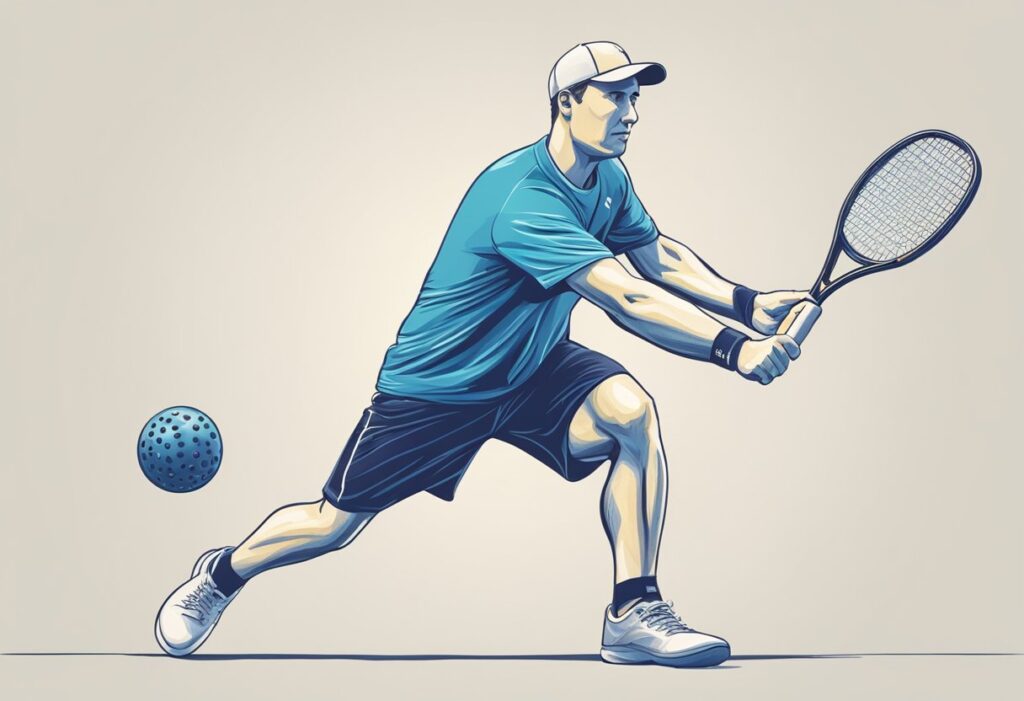
Enhancing your serve in pickleball can significantly boost your scoring potential. The right techniques and consistent practice enable you to serve with greater precision and power.
Practical Tips and Drills
-
Foot Placement and Stance: Position your feet shoulder-width apart with a slight knee bend. This provides stability and the ability to generate power from your legs.
-
Serving Technique: Aim for a fluid motion, hitting the ball on the underhand swing below your waist level to comply with official rules. Using your entire body—not just your arm—favors a stronger serve.
- Target Practice: Improve accuracy by practicing serving to different areas of the court. Visualizing a target before each serve can help maintain focus and increase precision.
-
Paddle Grip: Hold your paddle comfortably with a relaxed grip to allow for wrist flexibility, contributing to better spin and control on serves.
-
Consistent Practice: Develop a routine that includes various serving drills, such as serving deep or placing serves close to the sidelines. Consistent practice is vital to developing muscle memory.
-
Serve Deep: Serving deeper into the opponent’s court adds pressure and makes their return more challenging, improving your chances to control the point.
-
Mix It Up: Keep opponents guessing by mixing up your serve speed, depth, and spin. Variety can lead to opponents making mistakes.
Implement these Pickleball tips and incorporate focused drills into your practice regimen to refine your pickleball serve. Remember that improvement comes from deliberate practice and adapting your serve strategy during match play.
Understanding the Game
Mastering pickleball begins with a solid grasp of its rules, particularly serving, which sets the pace for play. Familiarize yourself with how scoring works, stay updated on rule changes, and understand the importance of communication throughout the game.
Comprehending Scoring
In pickleball, points can only be scored by the serving side, called a “side out.” The score dictates who serves and from which side of the court. You must call out the score in the sequence of the serving team’s score, the receiving team’s score, and the server number (1 or 2 if playing doubles) before each serve. Correctly calling the score is mandatory and ensures clarity for all players.
Rules and Updates
The serve in pickleball must be delivered underhand, and contact with the ball should be made below your waist. The latest pickleball rule changes clarify that the server’s arm must be moving in an upward arc, and the paddle head must be below the wrist when striking the ball. Keeping abreast of these rules is crucial because they can impact the strategy and outcome of your game.
Effective Communication
Clear communication during matches ensures that all players are aware of the score and which side is serving and adhere to the game’s flow. It prevents disputes and upholds the integrity of the match. With effective communication, your focus can remain on strategy and execution rather than score discrepancies.
By understanding these facets of the game, you will enhance your playing strategy and enjoy a more coherent, competitive pickleball experience.
Pickleball Culture and Etiquette
In pickleball, maintaining a standard of proper behavior and respect on and off the court is just as important as mastering gameplay mechanics. This section will guide you through the expected sportsmanship and conduct that define the unique pickleball culture.
Sportsmanship and Conduct
When you step onto the pickleball court, you’re not just an athlete you’re a guardian of the game’s integrity. Your conduct should reflect pickleball culture’s core values, which emphasize fair play and mutual respect among players. Whether serving from the correct service court or anticipating your opponent’s readiness, your actions set the tone for the game.
- Honesty in Gameplay: Always be forthright about line calls and scores. If the ball’s in, it’s in; if it’s out, it’s out.
- Pre-Serve Protocol: Before serving, ensure your opponents are prepared and the score is clearly announced. This ensures no confusion about the state of play and respects the other pickleball player‘s right to be ready.
Encouragement and Positivity: Celebrate good plays with a light-hearted attitude. Pickleball culture thrives on a positive environment where players uplift each other, even during competition.
Respect for Equipment and Facilities: Treat both your and others’ equipment with care. When you’ve finished a game, take the time to tidy up your area, making it welcoming for the next players.
Remember, your actions during pickleball not only showcase your own character but also contribute to the collective experience of all who participate in the game. It’s this spirit of sportsmanship and exemplary conduct that continues to grow and enrich the community surrounding pickleball.
Historical Context and Evolution of Serving Rules
Pickleball has seen considerable changes in its serving rules since its inception, adapting to the sport’s growing demands and player skills.
Rule Changes Over Time
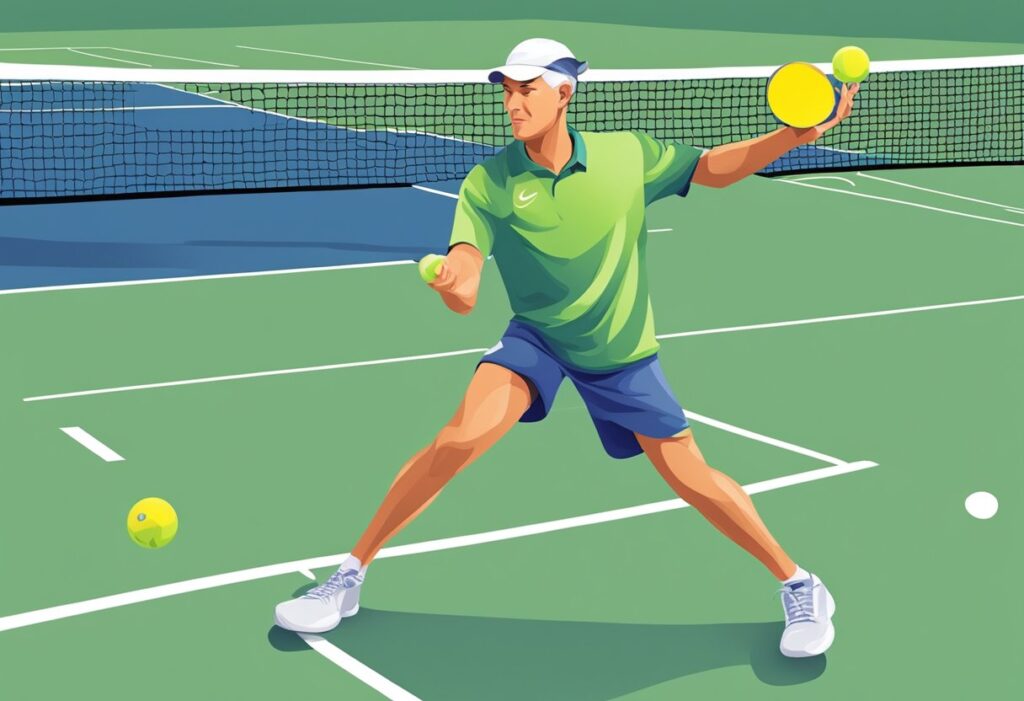
Initially, pickleball serving rules were informal as the sport was in its embryonic stages post the creation of Pickleball in the 1960s. As it gained popularity, clearer rules were established to standardize gameplay. For instance, the original serve in pickleball required the ball to be hit underhand, making the serve more accessible for players of all ages and skill levels.
With the evolution of the sport, rule changes have been implemented to improve competitive balance and fairness. For example, in 2022, a significant pickleball rule change occurred concerning the serve. This change introduced the “drop serve,” which allows you to drop the ball onto the court as opposed to tossing it in the air before striking it. This adjustment reflected the sport’s adaptability and consideration for players’ diverse abilities.
Moreover, there have been refinements in serving faults as well. These include faults for stepping on or over the baseline and for serving the ball out of bounds. Strict enforcement of serve rules maintains the integrity of the game, ensuring that all players meet a defined standard during gameplay. Understanding the history and evolution of these rules allows you to appreciate pickleball’s growth as a sport and helps you adapt to its ever-changing landscape.
Terminology and Definitions
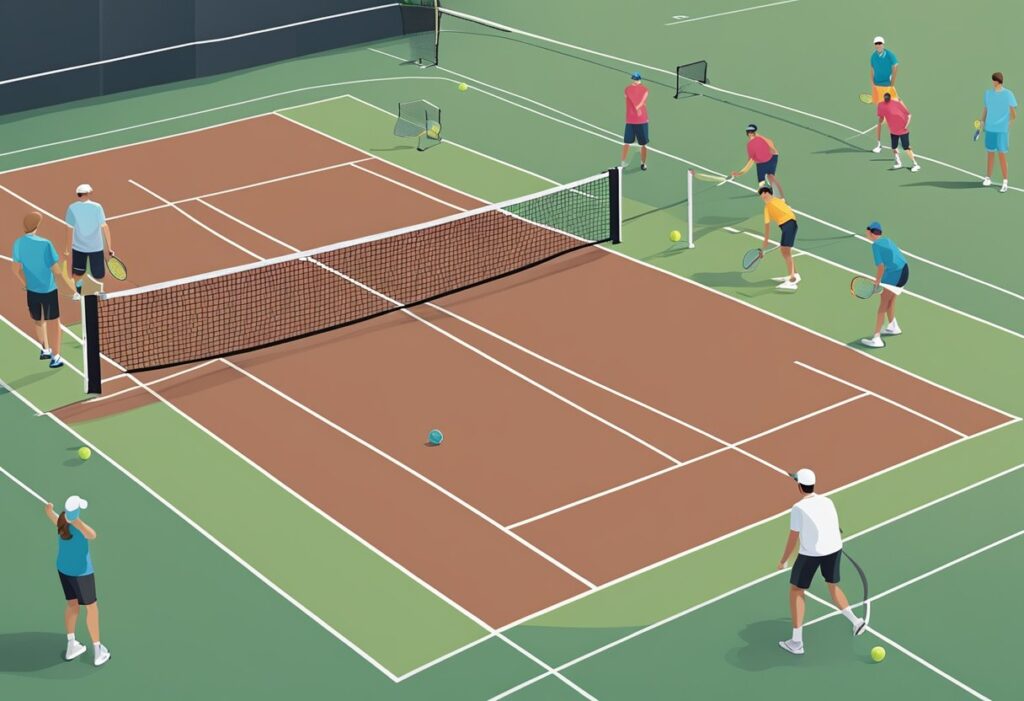
Understanding the terminology is crucial for mastering the rules and techniques of pickleball, especially when it comes to serving. Familiarizing yourself with the following terms will help you get a better grasp on how to serve correctly in the game.
Key Terms in Pickball
- Pickleball: A paddle sport that combines elements of tennis, badminton, and table tennis, typically played on a badminton-sized court with a modified tennis net.
- Kitchen: Slang for the non-volley zone, which is the area on the pickleball court extending 7 feet from the net on either side. You cannot volley the ball in this area.
- Non-Volley Zone: A section of the court where the player must not hit the ball before it bounces once. It is intended to prevent players from executing smashes right at the net.
- Serve: Initiating play by hitting the ball underhand diagonally across the court into the opponent’s service box.
- Faults: Occurs when a rule is violated during the serve or during play, which results in the loss of the point or service opportunity.
- Backhand Motion/Backhand: A stroke where the back of the hand facing forward to hit the ball. It’s useful when the ball is on the opposite side of your paddle hand.
- Two-Bounce Rule: After the ball is served, each side must let the ball bounce once before volleys are allowed. This means the receiving team must let the serve bounce, and the serving team must let the return bounce before play can continue with volleys.
- Rules: The official guidelines that dictate how pickleball is played, scored, and officiated.
- Terminology: The set of terms and phrases associated with the game of pickleball and its rules.
Pickleball Equipment
Before stepping onto the pickleball court, ensuring you have the right Pickleball equipment is crucial. Your performance can be significantly affected by the quality and suitability of your paddle.
Choosing the Right Paddle
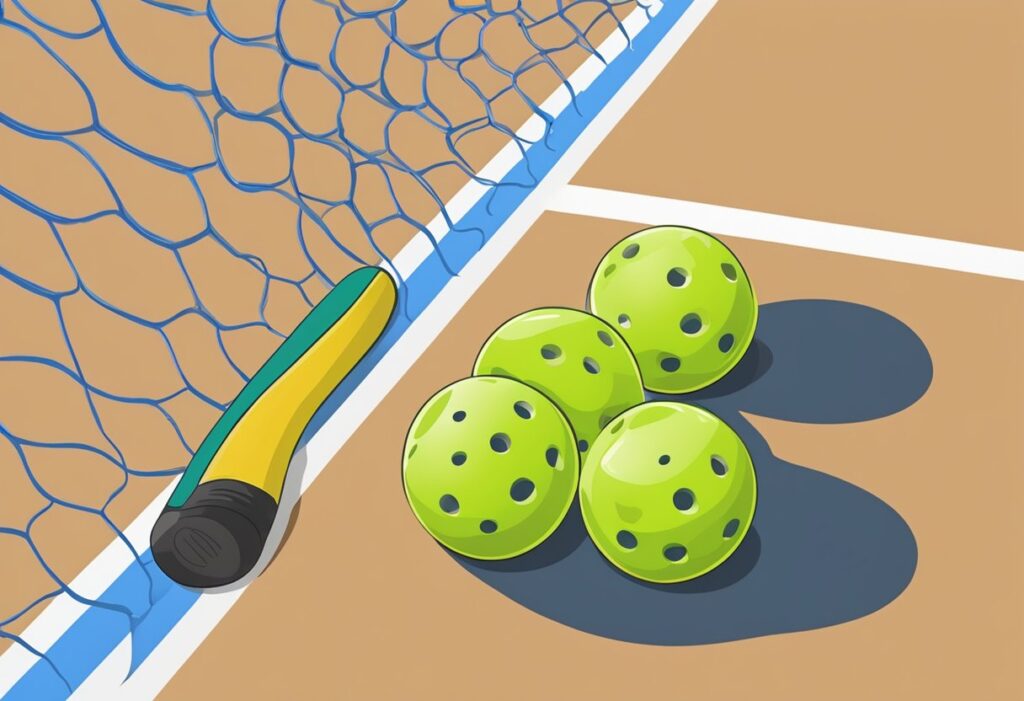
When selecting your pickleball paddle, consider its weight, grip size, and materials. Lighter paddles offer more control and quicker reactions, while heavier paddles provide more power behind your shots. The grip size should fit comfortably in your hand to prevent strain and improve your hold.
Materials vary; common options include wood, composite, and graphite. Wooden paddles are durable and cost-effective, making them a good choice for beginners. However, they’re generally heavier. Composite paddles are a middle ground, offering a balance of power and control, with various surface materials and core options to enhance playability. Graphite paddles are lightweight with a stiff surface, affording you precise shots and quick hand movements.
Remember, your paddle is an extension of your arm in this strategic game. Invest in one that complements your style of play and meets the specifications of the USA Pickleball Equipment Standards.
Frequently Asked Questions
This section provides clear answers to common queries about the serving rules in pickleball.
What are the basic serving rules in pickleball?
You must serve the ball underhand below your waist level. The serve should be made diagonally across the court and land in the opposite service area. For more details on the serving basics, check Serving Basics.
Is there a specific technique required for legally serving in pickleball?
Yes, a legal serve requires an underhand motion where the paddle head does not rise above your wrist and you must strike the ball below waist level. The serve cannot be made until the entire score is called. For technique specifics, see Pickleball Serving Rules Explained.
Can you explain the rules of serving rotation in pickleball?
In doubles, the serve alternates between partners. The first service turn only allows for one partner to serve from the right-hand court; thereafter, both partners get the chance to serve when possession switches. If a point is scored, the serving player switches sides and continues serving until a fault occurs. For a comprehensive breakdown, visit Pickleball Serving Sequence.
What happens if the ball hits the net during a pickleball serve?
If the ball hits the net and lands in the appropriate service box, it is considered a let and the serve is replayed without penalty. There are no limits to the number of consecutive lets. For intricate rules, refer to Comprehensive Guide to Pickleball Serving.
Are there different serving rules for singles and doubles play in pickleball?
In singles play, the server serves from the right service court when their score is even and from the left when their score is odd. In doubles, both players on the serving team have the opportunity to serve, except for the first server at the start of each new game. For deeper insights, browse Pickleball Service Rules.
What constitutes an illegal serve in pickleball?
An illegal serve occurs if you hit the ball above waist level, with the paddle head above your wrist level, or if the serve is not diagonal or doesn’t clear the net. Serving before the score is called or stepping on the baseline during the serve also leads to a fault. For understanding what to avoid, consider Pickleball Serving Rules.


Leave a Reply