

Pickleball vs tennis presents a contrast in court size, equipment, and playing style. While tennis is played on a larger court with heavier racquets and emphasizes powerful, elongated swings, pickleball features a smaller court and lighter paddles. It focuses on quick reflexes, finesse, and strategic placement over sheer force.
In this post, we’ll explore the contrasting dynamics of pickleball and tennis, shedding light on the unique characteristics that set these two racket sports apart. Whether you’re a seasoned tennis player curious about pickleball or a pickleball enthusiast intrigued by the world of tennis, this comparison will provide valuable insights into each sport’s distinct thrills and challenges.

Table of Contents
Affiliate Disclaimer
As an Amazon Associate I earn from qualifying purchases. As an affiliate, we also get commissions for purchases made through links on this website from other third parties.
Overview of Racket Sports
Racket sports are versatile activities that involve a racket to hit a ball or shuttlecock across a net into the opposing player’s area. Here are some popular racket sports you might consider:
Popular racket sports you might consider:
- Tennis: You play on a rectangular court with marked boundaries. The objective is to hit a felt-covered rubber ball over a net so your opponent cannot return it. Tennis can be played in singles or doubles format, and tennis rules govern the game, which include specific scoring methods and in/out of bounds criteria.
- Pickleball: A fusion of tennis, badminton, and table tennis. You play with a solid paddle and a perforated plastic ball. The court is smaller, and the pickleball rules involve underhand serving and a non-volley zone known as the “kitchen.”
- Padel: Played on an enclosed court about a third smaller than a tennis court. The walls are part of the game, adding a unique element not found in other racket sports.
- Paddleball (Paddle Sport): Similar to racket sports, it typically does not involve a net. Instead, you hit a small rubber ball against a wall.
Differences in equipment and rules define each sport. For example, tennis uses stringed rackets, while pickleball employs solid Pickleball paddles without strings. Consider the following table for a quick comparison:
| Sport | Court Size | Equipment | Scoring |
|---|---|---|---|
| Tennis | 78′ x 27′ (singles) | Stringed racket, felt ball | Games, sets |
| Pickleball | 44′ x 20′ | Solid paddle, plastic ball | Up to 11 or 15 points |
| Padel | 66′ x 30′ | Solid racket, felt ball | Games, sets |
When choosing a racket sport, consider your court size, equipment type, and play style preferences. Whether you prefer the traditional game of tennis, the growing popularity of pickleball, or the wall-based strategy of padel, each sport offers a unique way to enjoy the thrill of the game.
Court Characteristics
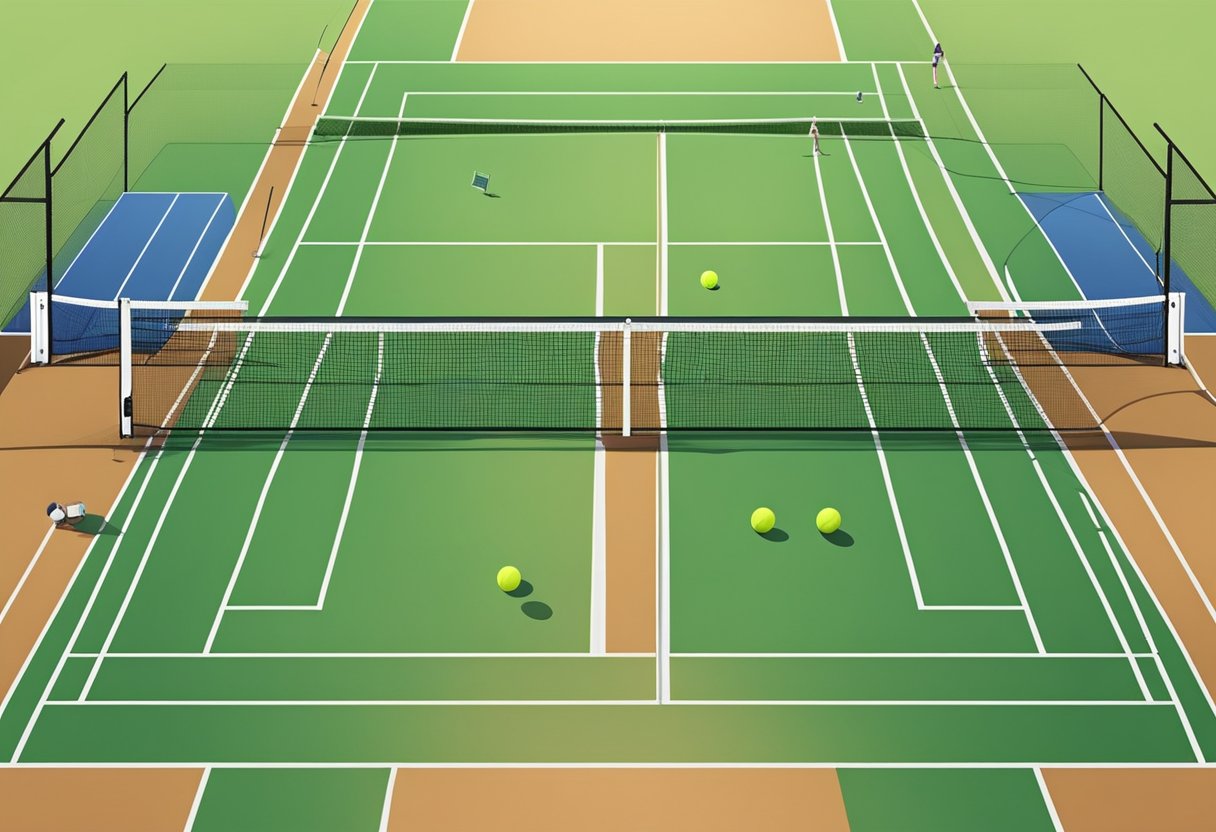
When comparing sports like tennis, pickleball, and padel, each has distinct court characteristics that affect how the game is played. Understanding the different dimensions and surface types is crucial to understanding how these sports vary.
Court Size Comparison
Tennis: The standard tennis court size for singles matches is 78 feet long and 27 feet wide. For doubles, the width extends to 36 feet.
Pickleball: A pickleball court measures 44 feet in length and 20 feet in width, smaller than a tennis court. The dimensions are identical for both singles and doubles. You can fit four pickleball courts into the same space as a tennis court.
Padel: The padel court is smaller than a tennis court yet larger than a pickleball court, usually 66 feet long and 33 feet wide.
Paddle Ball/Badminton: Typically, a badminton court is 44 feet long and 20 feet wide, the same size as a pickleball court.
Net Specifications
Net Height: Each sport has a net height that influences the game’s dynamics.
- Tennis: The net’s height at the center is approximately 3 feet.
- Pickleball: The net in pickleball is hung at 36 inches on the ends and dips to 34 inches in the middle.
- Padel: Padel nets stand at 2 feet 10 inches in height.
Playing Area Terminology
You’ll encounter unique terms for different court areas in tennis and pickleball.
- Tennis: The area close to the net is often called the ‘service box’ or ‘volley zone.’
- Pickleball: This sport has a unique area known as the ‘kitchen’ or ‘non-volley zone,’ which is the 7-foot space on either side of the net where volleying is prohibited.
Court Surfaces
Different games typically occur on different surfaces, influencing the speed and style of play.
Tennis: Grass, clay, and hard courts are the most common surfaces, offering a distinct playing experience.
Pickleball: Can be played both indoors and outdoors and, therefore, has a variety of surfaces such as concrete, asphalt, and wooden gym floors. Balls are also different, with indoor and outdoor Pickleballs designed to suit the playing environment.
-
Padel: Primarily played on artificial grass filled with sand to control the bounce and pace of the ball.
Remember, each sport’s court characteristics are designed to enhance the specific gameplay and strategies inherent to that sport.
Equipment and Gear
When considering tennis and pickleball, your equipment significantly affects your play. Each sport has distinct gear designed for its unique gameplay and court requirements, ranging from the paddles and rackets you swing to the balls you strike.
Paddle and Racket Design
Tennis rackets are characterized by their strung surface, which acts like a spring to propel the ball. They’re often made from lightweight yet sturdy materials like graphite or composite material, with an edge guard to protect from damage.
In contrast, pickleball paddles lack strings and are instead solid, with a firm hitting surface that provides less bounce. They’re typically a wood, composite, or graphite blend designed for quick, precise shots. The surfaces of these paddles can range in texture to influence ball spin and control.
Ball Types and Characteristics
Tennis balls are covered in a fuzzy and air-filled fabric, allowing them to bounce and travel through the air quickly and predictably. They’re heavier in weight, making them responsive to a tennis racket’s string tension.
Conversely, pickleball balls are molded from hard plastic with holes dotted around their surface, similar to a Wiffle™-like ball. These holes minimize air resistance and affect the ball’s trajectory. Lighter and smaller than tennis balls, they are designed for the quick, close-range play typical in pickleball.
Other Essential Gear
Your shoes and clothing are critical equipment in both sports, as they need to support swift, multi-directional movements. Opt for footwear with good lateral support and a durable sole. Clothing should be lightweight and moisture-wicking to keep you comfortable during play.
Apart from rackets and balls, other essentials include grip tape for your paddle or racket to ensure a secure hold, buckets or bags for Pickleball paddle and ball storage, to keep your gear organized and ready for the next game.
Gameplay and Rules
Understanding the specific gameplay and rules is crucial in comparing tennis and pickleball. Each sport has distinct serving mechanics, scoring systems, and strategic elements that shape how they are played.
Serving Mechanics
You serve from behind the baseline in tennis, alternating between the right and left courts for each point. The serve must travel diagonally, clearing the net into the opposite service box.
The Pickleball serve is executed underhand and must contact the ball below the waist. Serves must land in the diagonal service box past the non-volley zone, or ‘kitchen,’ adhering to a double bounce rule where the ball must bounce once on each side before volleys are allowed.
Scoring Systems
Tennis uses a traditional scoring system where games are scored as love (0), 15, 30, 40, and game points, with a potential for deuce and advantage points.
In contrast, pickleball is typically played to 11, 15, or 21 points, and you must win by 2 points. Scoring can only occur when serving, and games are often played as best-of-three or best-of-five matches.
In-Game Tactics
Strategic play in tennis includes a variety of strokes like slices, topspin, or flat hits, with players moving opponents around the court to open spaces for winners.
While also employing spin and volleys, pickleball focuses more on drop shots and dinks near the net, which require finesse rather than power. A key pickleball strategy is to gain the advantage at the net, using the non-volley zone to prevent smash returns.
Faults and Penalties
Faults in tennis include hitting the ball outside the court boundaries, not clearing the net, or committing a double fault on the serve.
Pickleball similarly penalizes for out-of-bounds shots and service errors but also includes unique rules such as the non-volley zone rule, where players cannot volley the ball from the ‘kitchen’ area, promoting a distinct style of play centered around patience and position.
Physical and Technical Demands
You’ll find they each have unique physical and technical demands when exploring sports like tennis and pickleball.
Tennis generally requires higher speed and strength, while pickleball has a more moderate fitness prerequisite but still necessitates skill and strategic play.
Skill and Fitness Requirements
Tennis: Your game will demand explosive movements, quick sprints, and significant endurance. Mastery involves honing your stroke power and learning to serve effectively, which can burn significant calories. Tennis training emphasizes agility, speed, and technical skill, making the beginner’s learning curve steep.
- Skill: High level of shot precision and technical form
- Speed: Fast-paced gameplay requiring quick reflexes
- Strength: Strong upper and lower body strength for powerful strokes
- Fitness: High cardiovascular and muscular endurance
Pickleball: This sport is more accessible with a smaller court and involves less physical strain on your body, making it a joint-friendly option. Pickleball’s lower impact on joints and the solid paddle’s forgiving nature slightly lower the barrier to entry skill-wise.
- Skill: Strategic placement and softer shots are key
- Speed: Relative quickness, but less running than tennis
- Strength: Less emphasis on power; more on control
- Fitness: Moderate endurance is sufficient for longer rallies
Check out my cardio guide for Pickleball to learn how Pickball can improve your fitness.
Physical Impact on Players
The physical impact of each sport on players is significant yet distinct. Tennis subjects your joints to more stress due to the large court size and quicker game speed, potentially leading to higher physical fatigue.
- Joints: High impact from running and jumping
- Calories: Higher calorie burn from more extensive movement
While still an active sport, pickleball offers a reduced physical toll. The smaller court size and slower ball speed translate into less demanding movements.
- Joints: Lower impact, friendly for people with joint issues
- Health Benefits: Good cardiovascular exercise with a moderate calorie burn
Cultural and Competitive Aspects
When comparing pickleball and tennis, examining their cultural impact and competitive scenes is crucial. You’ll discover that each sport’s trajectory and cultural significance offer a unique narrative deeply ingrained with history and modern-day progression.
Popularity and Growth
Pickleball is often cited as one of the fastest-growing sports in the United States, originating in Seattle in the mid-1960s. Created by Joel Pritchard, Barney McCallum, and their friends as a family game, pickleball has evolved to garner millions of enthusiasts. The popularity of this sport has led to the establishment of the USA Pickleball Association to govern and promote its growth. Meanwhile, tennis, long-established in England, has maintained a steadfast global presence. The sport has casual appeal and a structured competitive ladder, underscored by its Grand Slam tournaments.
Historical Significance
The history of tennis spans centuries, with its origins tracing back to 12th-century France. As a historical sport, it has been considered more traditional, associated with prestige and formality, especially within the United States and England.
While relatively newer, pickleball’s origins reflect a modern twist on racket sports, tailor-made for family entertainment and community engagement. This historical contrast between the two sports reflects their diverging cultural tenets and their societal roles.
Organizational Bodies
In tennis, the International Tennis Federation and national bodies like the United States Tennis Association preside over the sport’s regulations and competitive play, including iconic Grand Slam competitions. Pickleball is overseen by the USA Pickleball Association, which handles the sport’s rules and sanctions tournaments. At the professional level, the emergence of Major League Pickleball has created new opportunities for competitive play and fan engagement, showcasing the sport’s rising stature in the athletic arena.
Comparative Analysis
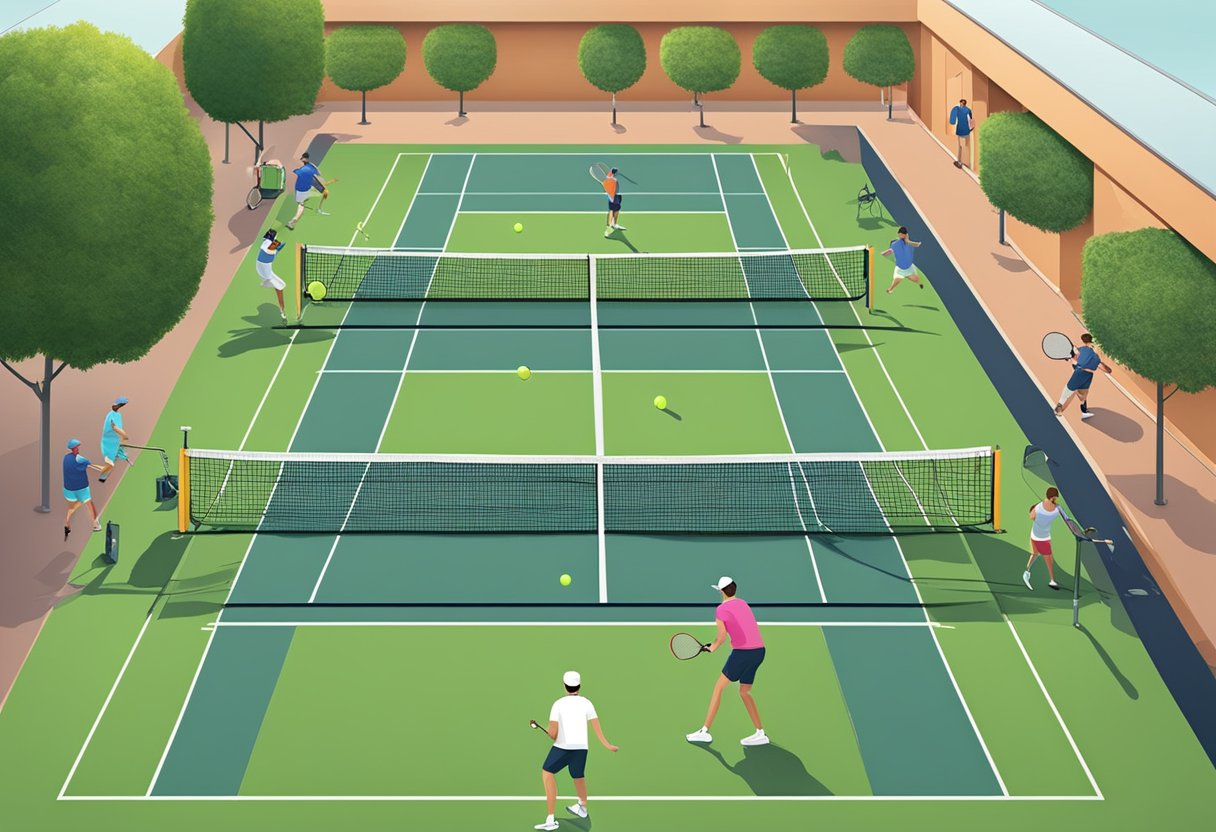
As you navigate the world of racquet sports, it’s important to understand the nuances and characteristics that set each game apart. From the court size to the type of equipment used, this section provides a methodical comparison to identify the key differences and similarities between sports like tennis, pickleball, paddleball, and padel.
Differences and Similarities
Court Dimensions:
Tennis demands more physical endurance, with a court measuring 78 feet in length and 27 feet in width for singles, expanding to 36 feet wide for doubles. In contrast, Pickleball courts are smaller at 20 feet by 44 feet, which can change the play dynamic.
Equipment:
Tennis utilizes string rackets; Pickleball is played with solid paddles and a perforated plastic ball, leading to a distinct playing style. Paddleball and padel also use solid paddles, akin to pickleball, but padel paddles are perforated.
Net Height:
The net stands at a standard height of 3.5 feet for tennis at the posts. Pickleball features a shorter net at the sides, allowing for different types of shots and strategies.
Family of Sports:
All these sports fall into the racquet sports family, sharing the fundamental objective of striking a ball over a net. However, they differ significantly in their ancestry: while tennis has European roots, pickleball is a modern American invention.
Gameplay:
Tennis is characterized by a best-of-three or five sets format, with players needing to win six games for a set by a margin of two.
On the other hand, pickleball typically plays to 11 points, winning by two.
Different strokes and strategies are employed: Tennis favors a combination of baseline and net play. At the same time, pickleball emphasizes underhand strokes and strategic placement due to its no-volley zone, or “kitchen.”
While these sports may seem like distant cousins, tennis being more physically demanding and pickleball requiring a blend of strategic finesse due to the smaller court size provide unique challenges and enjoyment for players. Paddleball and padel offer variations that might appeal to your preferences, with nuances like wall play in padel altering the game flow compared to the more straightforward play of pickleball.
Transitioning Between Sports
When moving from tennis to pickleball or vice versa, it’s vital to recognize the similarities and differences in skills and strategies required for each sport. Your ability to adapt and employ crossover techniques will shape how quickly you can transition and potentially excel.
Adaptation for Tennis and Pickleball Players
Tennis Players Adapting to Pickleball: If you’re a tennis player, adapting to pickleball involves adjusting to a smaller court and a no-volley zone, also known as the kitchen. Serving in pickleball is underhand compared to the overhand serves in tennis. Your tennis groundstrokes will come in handy, but you’ll need to adopt a lighter touch and quicker reflexes for the fast-paced volleying near the net.
- Court Size: A pickleball court is about a third of the size of a tennis court, affecting how you position yourself and move after the ball.
- Serving: You must adapt to underhand serving and understand that a point can only start when the serve is done diagonally and lands in the opposite service box.
Pickleball Players Adapting to Tennis: As a pickleball player, transitioning to tennis requires adapting to a larger court and the endurance to play longer points. Your hand-eye coordination and quick reflexes from playing close to the net can translate well into volleying in tennis.
- Strokes: In tennis, your swinging motion can be more extensive due to string rackets, unlike the solid paddles in pickleball.
- Mobility: Greater court coverage is essential, so your lateral and baseline movement must increase.
Crossover Skills and Techniques
Skill Transfer: Certain skills can serve you well in both sports. Your ability to judge the ball’s trajectory and hand-eye coordination are universal assets. Also, both sports require good footwork, though the specific patterns may differ.
- Volleying: In both sports, being able to volley effectively is crucial. Your quick reflexes and sharp hand-eye coordination are beneficial for fast exchanges at the net.
Strategy Adaptation: Understanding the strategic nuances of each sport is also key. For instance, the serve-and-volley strategy from tennis is less applicable in pickleball due to the no-volley zone.
- Tennis to Pickleball: You’ll find that the softer game of dink shots in pickleball contrasts with the powerful baseline game of tennis.
- Pickleball to Tennis: Conversely, transitioning from the quick volleys and strategic placement of pickleball to the strength and endurance-focused tennis rallies can be quite a shift.
In both transitions, respecting the unique elements of tennis and pickleball will facilitate a smoother changeover. Adaptation and transfer of skills are possible with practice and a strategic understanding of the differences and similarities in gameplay.
Economic and Social Considerations
When choosing between tennis and pickleball or exploring padel and paddleball, you must consider how these sports impact your wallet and social circle. Each sport presents unique economic and social dynamics that cater to different demographics and competitive appetites.
Equipment Costs
In tennis, your initial investment includes a quality racket, balls, and shoes, pushing the start-up cost higher than pickleball, where the equipment is generally less expensive. For example, a solid paddle and a set of pickleball balls are often more affordable than the string rackets and pressurized tennis balls used in tennis. Padel and paddleball also require specific equipment, like paddles and balls. Still, like pickleball, these sports are known for their relatively low entry costs, making them more accessible for you if you’re budget-conscious.
Tennis:
- Racket: Typically >$100
- Balls: ~$3 per can
- Shoes: >$75
Pickleball:
- Paddle: ~$50-$100
- Balls: ~$2 each
- Shoes: You can use general athletic shoes
Padel/Paddleball:
- Paddle: ~$50-$150
- Balls: Similar to tennis balls in cost
Attractiveness to Different Demographics
Pickleball has soared in popularity among younger players and seniors due to its social nature, smaller courts, and a more forgiving learning curve. You might find pickleball better if you’re looking for a less physically demanding sport with a fun, community vibe.
With its longstanding tradition, tennis offers a competitive edge and attracts players invested in a more vigorous and individualistic sport.
The competitiveness of padel, a sport that blends elements of tennis and squash and is played in doubles, might appeal to you if you enjoy strategy and teamwork.
Similarly, paddleball, known for fast-paced action and smaller, enclosed courts, can provide a good mix of social interaction and physical challenge.
In conclusion, your choice should align with the economic investment and the social and competitive fulfillment you’re seeking.
Player Community and Events
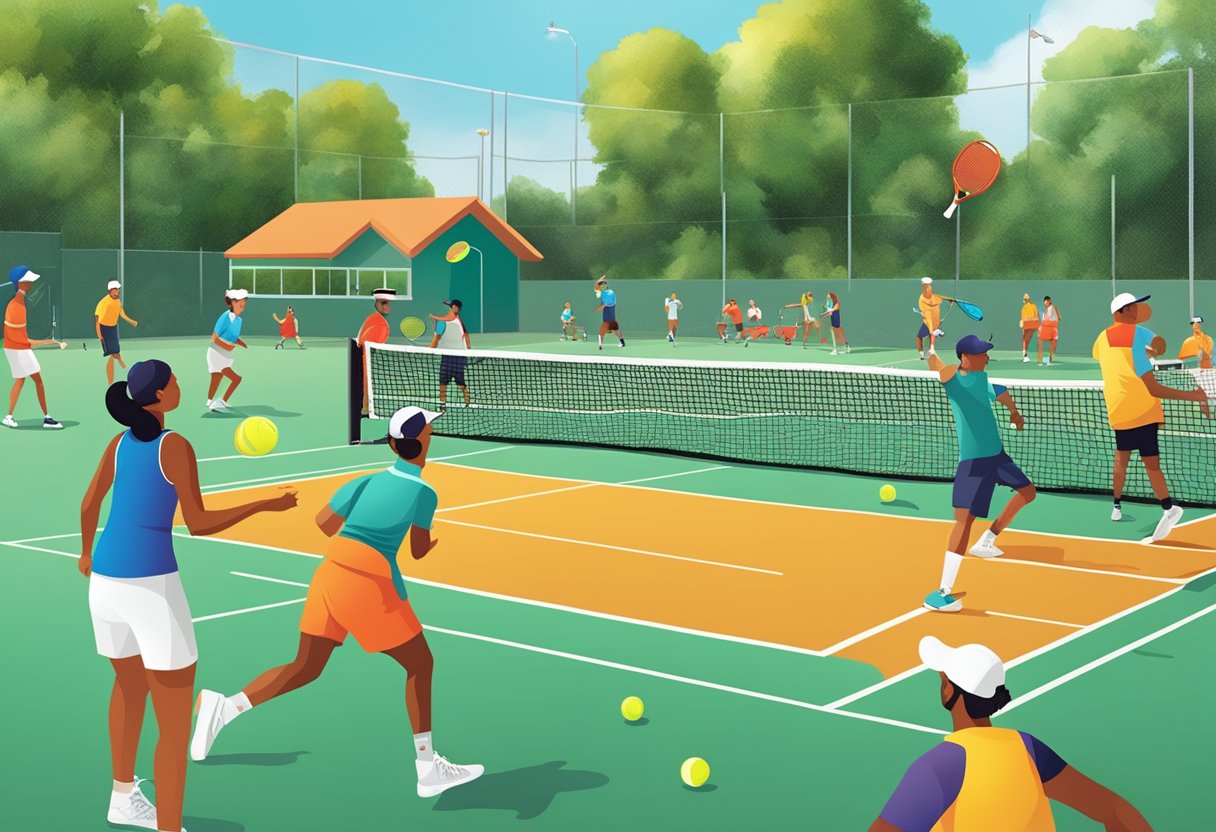
Community and event participation play pivotal roles in the dynamic worlds of tennis and pickleball. As you explore these sports, you’ll find robust tournament scenes, active clubs, and growing communal engagement catering to recreational and competitive players.
Tournaments and Leagues
In pickleball, tournaments draw a wide spectrum of participants, from local amateur events to professional matches within the Major League Pickleball circuit. The USA Pickleball Association sanctions events nationwide, often seeing thousands of players competing. Conversely, tennis features a structured league system from the grassroots level to the prestigious Grand Slams, where top professionals vie for glory, and millions of fans tune in.
- Pickleball Tournaments: Local, national, and regional championships
- Tennis Leagues: Club play, ATP/WTA tours, Grand Slams
Local and International Clubs
Local pickleball clubs may invite you to casual meet-ups or intense play, reflecting the sport’s surging popularity. Whereas tennis clubs often offer programs catering to all ages and abilities, some are serving as training grounds for future competitors on the international stage. Both sports boast a strong presence with clubs in numerous countries, highlighting their global reach.
- Pickleball Clubs: Community-centric, growing networks
- Tennis Clubs: Developmental programs, competitive training
Growth and Community Engagement
Pickleball touts a community-first mentality, with initiatives to increase community engagement, often through social events and clinics.
Maintaining its status as a widely popular sport, Tennis focuses on both competitive growth and fostering a sense of camaraderie among players of all levels. Both communities are seeing growth, with pickleball experiencing a rapid increase in interest, now engaging millions worldwide.
- Pickleball Engagement: Clinics, social mixers, beginner-friendly
- Tennis Growth: Global initiatives, youth programs, outreach efforts
Frequently Asked Questions
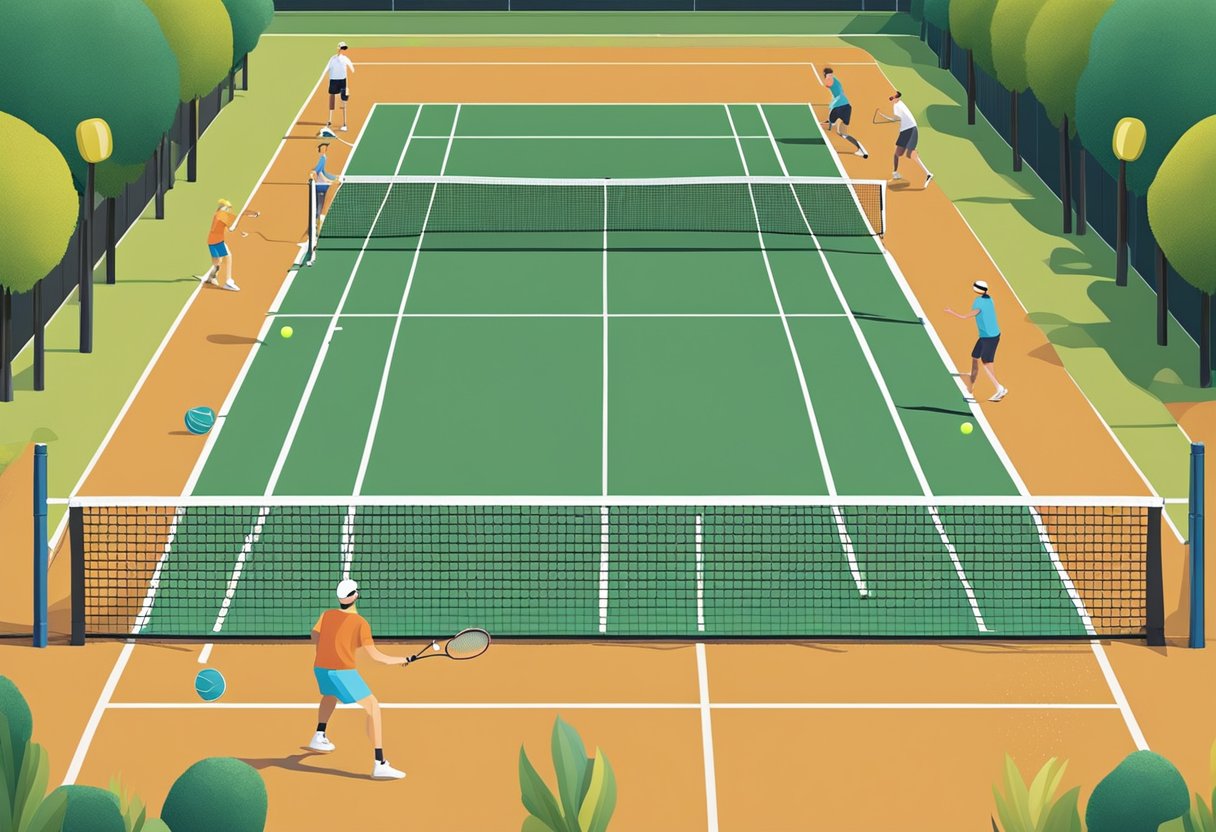
In this section, you’ll find targeted answers to common queries comparing pickleball to tennis, paddleball, and padel. These answers will clarify differences in equipment, scoring, rules, court dimensions, and the skill sets required for each sport.
What are the key differences between the equipment used in tennis and pickleball?
Tennis requires a string racket, whereas pickleball uses a solid paddle made from wood or composite materials. In tennis, the ball is a pressurized felt-covered rubber ball, while pickleball is played with a lighter, perforated plastic ball.
How does the scoring system vary between padel and pickleball?
Padel scoring follows the same format as tennis, counting 15, 30, 40, and game points. In contrast, pickleball games go up to 11 points and must be won by 2, with points being scored only when serving.
What are the main rules differences between paddleball and pickleball?
Paddleball typically does not incorporate a non-volley zone (kitchen), a distinctive feature in pickleball where volleys are prohibited. Also, paddleball allows players to use the walls in play, unlike pickleball.
In which ways do pickleball and paddle sports overlap and differ?
Pickleball and paddle sports involve a paddle/racket and a perforated or rubber ball. They differ as pickleball has a unique two-bounce rule and a smaller court, promoting a different strategic approach than other paddle sports.
What are the dimensions of a pickleball court compared to a padel tennis court?
A pickleball court measures 20×44 feet, notably smaller than a padel court, which is 33 feet by 66 feet. This size difference greatly affects movement and strategy during play.
How do the skills required for pickleball compare to those needed for traditional tennis?
Pickleball emphasizes placement and control due to the smaller court and lightweight ball. Traditional tennis typically requires more power and endurance to cover the larger court and respond to the faster-moving ball.


Leave a Reply