

Mastering the art of serving, volleying, and positioning is essential in learning to play pickleball. Understanding the rules, including the double bounce rule and the non-volley zone, will empower you to navigate the court with finesse and outmaneuver your opponents.
Curious about how to play pickleball?
Whether you’re a beginner looking to master the basics or an experienced player seeking to elevate your game, understanding the ins and outs of pickleball is essential for enjoying this exhilarating sport to the fullest. In this post, we’ll guide you through the essential rules, techniques, and strategies to help you step up your pickleball prowess and embrace the thrill of the game.
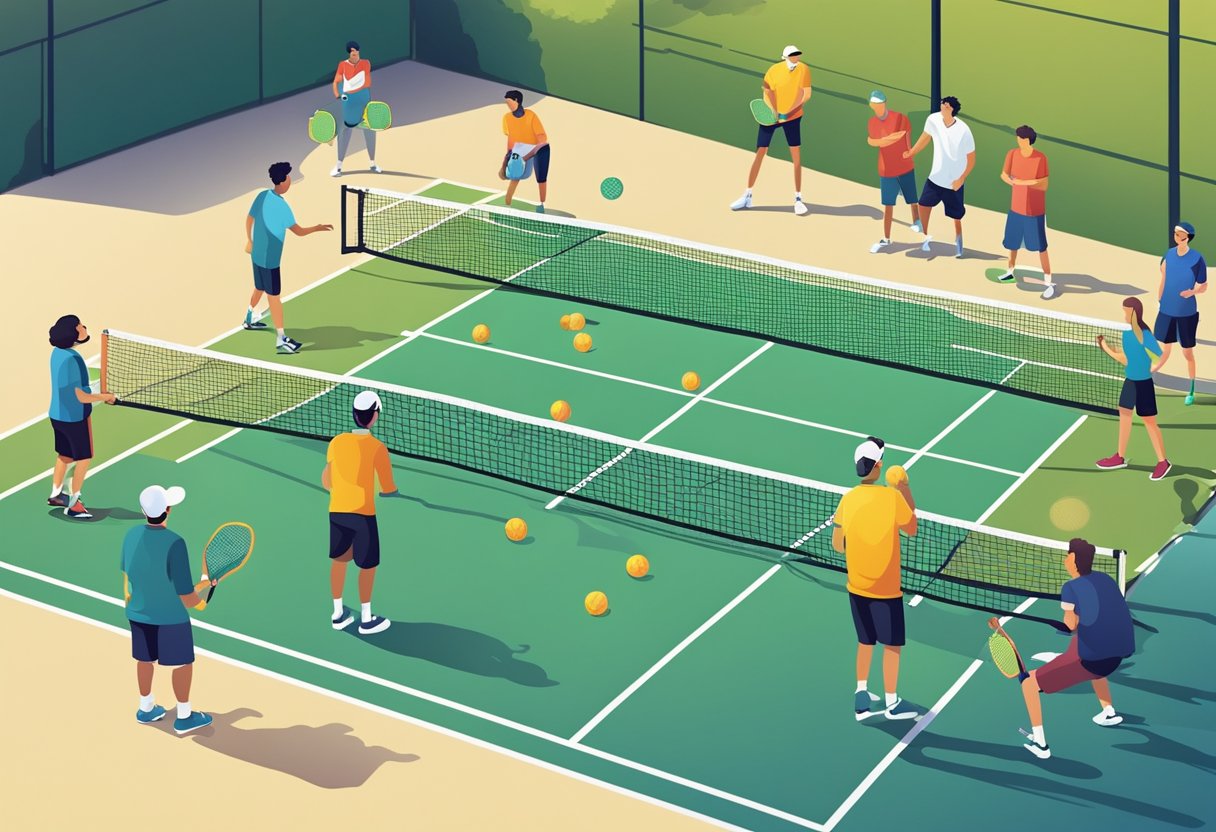
Table of Contents
Affiliate Disclaimer
As an Amazon Associate I earn from qualifying purchases. As an affiliate, we also get commissions for purchases made through links on this website from other third parties.
How to play Pickleball: Pickleball Basics
The first key things that you need to know if you want to learn how to play Pickleball are:
- Pickleball is played as singles (1 on 1) or doubles (2 on 2)
- Pickleball is played with a paddle and a plastic ball.
- Pickleball is played on a court marked by baselines, sidelines, and a non-volley zone known as the kitchen.
- Pickleball Points are scored by the serving side when the opponent faults.
Equipment and Gear
Before you start, you’ll need a few essentials: a pickleball paddle, smaller than a tennis racket but larger than a ping-pong paddle, Pickleball balls designed explicitly for pickleball, and comfortable clothing and shoes suitable for court play.
Setting Up the Play Area
A pickleball court is similar in dimensions to a badminton court and is segmented into service courts and a non-volley zone.
The Pickleball net is 36 inches on the sidelines and 34 inches at the center.
Rules and Scoring
Pickleball follows simple rules, which include a serve that must be underhand with the paddle below the waist, and the serve must go diagonally across the court. Games are typically played to 11, 15, or 21 points, and winning requires a lead of at least 2.
Preparation and Safety
Ensure you have plenty of water to stay hydrated and do a proper warm-up to prevent injury.
It’s also important to wear proper gear, like supportive pickleball shoes, to maintain traction on the court.
5 Key Steps To Learning Pickleball:
- Master the basic pickleball strokes, including the serve, groundstrokes, volleys, and dinks.
- Understand the rules and strategies of the game, such as the double bounce rule and the non-volley zone.
- Practice positioning and footwork to cover the court and anticipate shots effectively.
- Develop consistency and accuracy in your shots through regular drills and gameplay.
- Continuously improve your understanding of pickleball tactics and game management to elevate your overall performance on the court.
The Social Aspect of Pickleball
Alongside being a fun and healthy activity, pickleball offers a vibrant community at parks and recreation centers, making it easy to find partners or join in on doubles play.
Learning Techniques and Strategies
Mastering pickleball involves learning a variety of shots like the Pickleball serve, dink, and volley, as well as strategic Pickleball gameplay, whether you’re playing singles or doubles.
Types of Play
You can engage in informal play at local community courts or participate in regulated matches or tournaments organized by groups like USA Pickleball.
Pickleball Variants
While traditional pickleball is the most common form, variations exist for those looking to mix up their game, including skinny singles and other adapted games for smaller spaces or less mobility.
Advanced Techniques
As you progress, you’ll learn to refine techniques like the dink, improve your serve accuracy, and develop strategic shot placement to outmaneuver your opponents.
Physical and Mental Game
Pickleball is not only your physical prowess but also your mental game. Developing focus, strategy, and the ability to anticipate your opponent’s moves are crucial.
Improving Your Game
Regular practice, coaching sessions, and drilling with a partner can enhance your skills.
Whether you’re strategizing a dink or working on your serve, consistent effort leads to improvement.
Pickleball Community and Growth
The pickleball community is welcoming and ever-expanding, with a significant increase in nationwide courts, clubs, and organizations dedicated to the sport.
Maintenance and Care
To ensure the longevity of your gear, regular cleaning of paddles, balls, and court shoes, along with proper storage, is essential.
Future of Pickleball
Trends indicate that pickleball will continue to surge in popularity, with innovations in equipment and expansion of facilities to accommodate the growing interest.
Regulations and Competitions
For competitive play, you can explore tournaments and leagues that follow the official rules and regulations set forth by USA Pickball, including scoring systems and acceptable equipment.
Understanding Pickleball Terminology
Familiarize yourself with terms like volley, let, fault, and double bounce rule to better understand gameplay and communicate effectively with other players.
Frequently Asked Questions
This section addresses common queries about pickleball, including rules, techniques, and equipment specifics.
What are the basic rules and scoring systems in pickleball?
Pickleball has a unique scoring system where games are usually played to 11 points, and you must win by 2 points. Service is underhand, and the ball must be hit in the air without bouncing. For a detailed guide on how to play, you might watch this how to play pickleball video, which covers all the basics you’ll need.
Can you describe the fundamental techniques and strategies used in playing singles pickleball?
In singles pickleball, a key strategy is to control the center of the court to cover the largest area efficiently. Use a combination of deep baseline shots and soft drop-shots to move your opponent around the court.
In doubles pickleball, what are the key positioning and teamwork tips?
In doubles, positioning is crucial. Stay parallel with your partner and communicate to cover the court effectively. Up at the net, use the ready position to stay on your toes and react quickly to shots.
What are the essential equipment and court specifications for a pickleball game?
Pickleball requires a paddle, larger than a ping pong paddle but smaller than a tennis racquet, and a plastic ball with holes. The court is 20×44 feet, divided into two service areas and a non-volley zone known as the ‘kitchen.’
How does the skillset required for pickleball differ from that of tennis?
While pickleball shares similarities with tennis, it emphasizes ball placement and strategy more than power and speed. Dexterity and quick reflexes are important as you often engage in rapid volleys close to the net.
What are the best practices for beginners starting out in pickleball?
Begin by mastering the serve and the basic strokes—the forehand drive, backhand, and soft dinking over the net. Familiarize yourself with the no-volley zone rules. Practice consistent serving and work on your up-at-the-net play to improve your chances during rallies.


Leave a Reply