

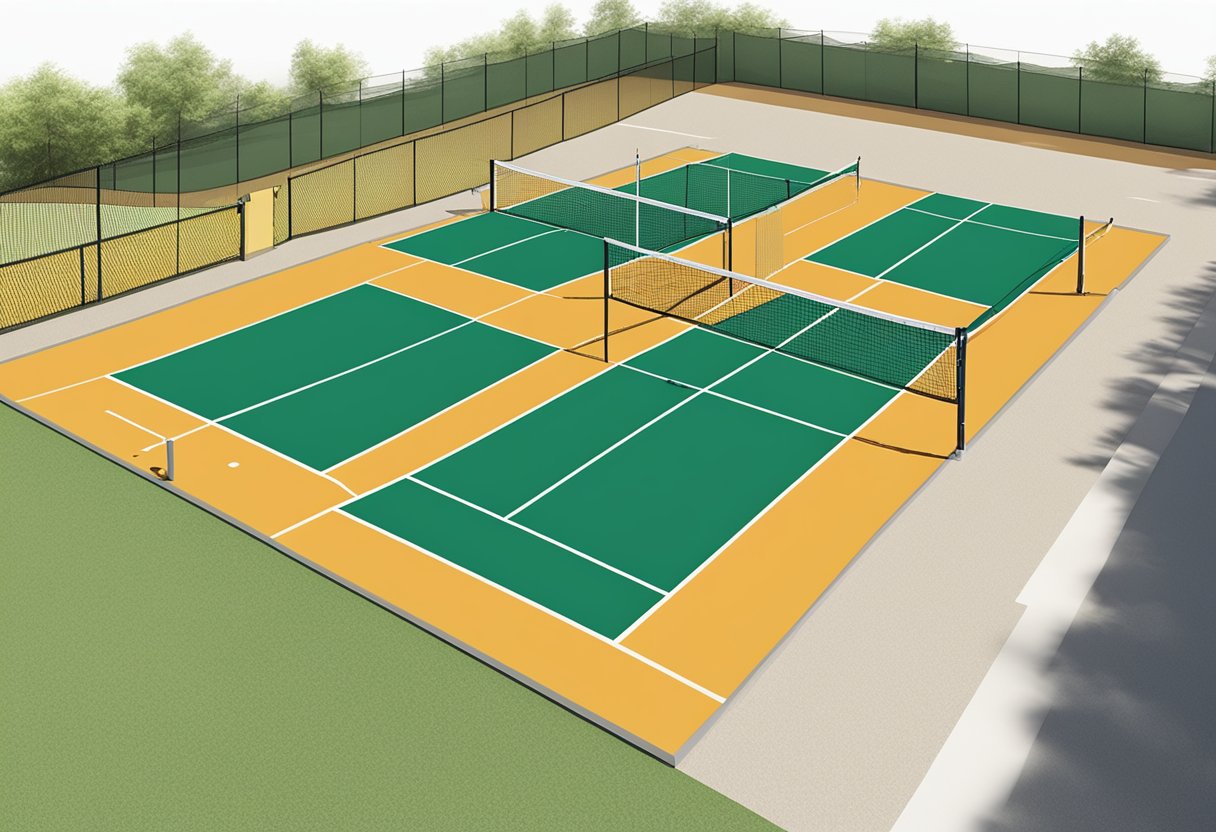
The dimensions of a pickleball court measure 20 feet wide and 44 feet long for doubles play, with a 7-foot non-volley zone on either side of the net.
Understanding how big is a pickleball court is essential for players to navigate the playing area effectively and strategize their movements during matches.
In this post, we’ll explore the dimensions of a pickleball court, shedding light on the specific measurements and layout to provide a clear understanding for players of all levels. Whether you’re new to the sport or a seasoned player, grasping the size and configuration of a pickleball court is crucial for honing your skills and strategic gameplay, making this information essential for all pickleball enthusiasts.

Table of Contents
Affiliate Disclaimer
As an Amazon Associate I earn from qualifying purchases. As an affiliate, we also get commissions for purchases made through links on this website from other third parties.
Overview of Pickleball Court
Exploring the specifics of a pickleball court is key to understanding the game. From the distinct markings to precise measurements, each aspect defines the playing field and influences gameplay.
Standard Court Size and Dimensions
A pickleball court is a rectangle with specific measurements crucial for the game’s layout. The standard court dimensions are:
- Length: 44 feet (13.41 meters)
- Width: 20 feet (6.10 meters)
These dimensions make the court size equivalent to a doubles badminton court. Within these boundaries are several lines and zones, each with its own function during play.
Terminology and Court Zones
Pickleball court terminology refers to distinct areas marked on the court for different aspects of the game. These zones include:
- Non-volley zone (the ‘kitchen’): This is a 7-foot area on either side of the pickleball net, extending the width of the court. Players must let the ball bounce once before playing it from this zone.
- Baseline: The line at the back of the court, running parallel to the net.
- Sidelines: The lines marking the width of the court perpendicular to the net.
- Centerline: Divides the service areas on each side.
Players serve diagonally across the court to the opponent’s service area. During play, the space within these lines and zones is where the action takes place, and knowing these areas is essential for both following the game and developing strategies.
Are you New To Pickleball? – Check out my Beginners Guide on How to Play Pickleball
Playing Field Details
When setting up a pickleball court, whether indoor or outdoor, understanding the dimensions of the playing area is crucial. Like badminton, a pickleball court shares the same length and width, which ensures consistency across all playing environments.
The official playing area measures 20 feet in width and 44 feet in length. This makes it smaller than a tennis court but sizable enough for swift, strategic play. Here’s a breakdown of the key zones within a pickleball court:
Non-Volley Zone (“the kitchen”): Extends 7 feet from the net on both sides, comprising a 14-foot span across the width of the court. Players must refrain from volleying in this area.
Service Areas: Two equal sections on either side of the court, past the kitchen, where serves must land.
Here’s a simple table to visualize the court’s layout:
| Zone | Width | Depth | Location |
|---|---|---|---|
| Non-Volley Zone | 20 ft | 7 ft | Directly next to net |
| Service Areas (x2) | 20 ft | 15 ft | Beyond the kitchen |
Both singles and doubles play to utilize the full dimensions of the court, with no alterations required between formats. Markings are clear and distinct, often contrasting to the court surface, aiding in visibility and precision during your game.
Whether you’re playing competitively or recreationally, knowing your pickleball playing area ensures you can set up your court correctly or use existing facilities without confusion.
Remember, your court will be the same for singles and doubles, so no extra modifications are needed when switching between these two types of play.
Court Surface and Materials
When building a pickleball court, the materials you choose for the surface play a crucial role in gameplay quality. Your primary options include concrete and asphalt, which provide a sturdy and consistent playing field.
Concrete surfaces are synonymous with long-term durability and low maintenance. They offer a reliable bounce that allows you to anticipate the trajectory of the Pickleball ball effectively. Concrete must be properly finished with a slightly rough texture to provide good traction and easy movement.
Asphalt offers similar benefits but will require more maintenance over time. It can soften in high temperatures, which may slightly alter playing conditions. Asphalt surfaces should be coated with acrylic paint to help protect the surface and provide the desired play characteristics.
Regardless of the base material, silica sand mixed with paint can create the texture needed for appropriate traction on your pickleball court surface. This not only aids players with grip but also minimizes the risk of slipping.
To clearly define boundaries, tape or paint is used to mark lines. Durable tapes designed for sports surfaces can withstand the wear and tear of pickleball games.
Some enthusiasts have experimented with alternative surfaces like grass, though it’s not recommended for competitive play. Grass can affect the ball’s bounce unpredictably, making it more suitable for a casual, fun variation of the game rather than a standard match.
Choosing the right surface material ensures your pickleball court remains a venue for sports excellence, providing a consistent and enjoyable experience.
Court Markings and Lines
When playing pickleball, it’s crucial to understand the layout and markings that define the court. The lines are typically white for visibility against the colored surface.
Here’s a breakdown of the key lines on a pickleball court:
- Baselines: These are the lines at the ends of the court, marking the lengthwise boundaries. Your serve must clear these lines to be considered in play.
- Sidelines: Running parallel to the baselines, the sidelines denote the width of the court and form the boundary for the out-of-bounds area on each side.
- Non-Volley Zone Lines: These lines extend 7 feet from the net on both sides, creating a zone often called “the kitchen.” Avoid volleying in this area.
- Centerline: This line divides the service areas into two equal rectangles on each court side.
The standard pickleball court dimensions are 44 feet in length and 20 feet in width. Here’s how the lines are arranged on the court:
| Line Type | Location |
|---|---|
| Baseline | Lengthwise boundary |
| Sideline | Widthwise boundary |
| Non-Volley Zone Line | 7 feet from the net |
| Centerline | Divides service areas |
The exterior lines of a pickleball court are considered in-bounds, which means any ball landing on the line is still fair play. The rule is the opposite for the balls landing in the out-of-bounds area beyond the baselines and sidelines—a ball landing past these lines is considered out.
For more on Pickleball rules, you can read my post on Pickleball Serving Rules
Remember to pay attention to these lines as they are fundamental to determining the game’s flow and making lawful plays.
Net Specifications
When setting up your pickleball court, the net plays a crucial role. Your net should adhere to specific dimensions and characteristics to meet official standards.
Net Dimensions:
The net should extend 22 feet in length to span the width of the court. It needs to have a width of 36 inches to ensure it hangs properly. The net’s height is 36 inches at the sidelines and should drop to 34 inches at the center of the court, maintained by a center strap to achieve the correct tension and height.
Posts and Cable:
Your net will be held in place by posts, which should be positioned outside the sidelines. These posts should stand at a height of 54 inches. The net is suspended by a cable or cord that runs through its top. This cable must be taut and straight, keeping the net at the intended height.
Mesh Size:
The net’s mesh size should also be small enough to prevent a pickleball from passing through it.
| Feature | Specification |
|---|---|
| Net Length | 22 feet |
| Net Height | 36 inches at the posts, 34 inches at the center |
| Post Height | 54 inches |
| Mesh Size | Small enough to prevent ball pass-through |
| Cable/Cord | Taut and straight |
| Center Strap | Used to maintain center height |
Ensure that your net is properly secured with the appropriate tension, which allows the ball to rebound consistently during play yet is not overly tight to create a hazard or affect the net’s height.
Gameplay Setup
When setting up for pickleball, whether you’re playing singles or doubles, the court is 20 feet wide and 44 feet long. This dimension is similar to a doubles badminton court. Unlike tennis, the compact size contributes to a faster-paced game requiring swift movements and reflexes.
Here’s a quick breakdown of the court setup:
- Net Height: The net is a critical component that divides the court. It stands at 36 inches on the edges and dips to 34 inches in the center.
- Service Courts: Each side of the net has a left and right service area. For singles play, you will serve from the right service area when your score is even and from the left when it’s odd.
A standard pickleball court is outlined with clear lines for both singles and doubles. While the overall dimensions do not change, the style of play does. In doubles, you and your partner share the service and receive areas requiring coordinated positioning and strategy.
The Kitchen: The non-volley zone, commonly called “the kitchen,” spans 7 feet from the net on either side. Players must avoid volleys from this area to keep the play legal and strategic.
Here’s a visual guide to the service areas:
| Side | Service Area |
|---|---|
| Left | For odd scores during singles |
| Right | For even scores during singles |
Comparative Analysis
When you assess the dimensions of a pickleball court, you’ll find it’s unique compared to other sports courts. A standard pickleball court measures 20 feet wide and 44 feet long, totaling 880 square feet in area. This size is consistent for singles and doubles play, making it versatile and straightforward for setting up matches.
In contrast, a tennis court is significantly larger, 78 feet by 36 feet for doubles. That’s almost four times the size of a pickleball court. Despite the difference, pickleball courts can often be set up within a tennis court area, allowing for shared use of the space.
Compare this to a badminton court, which shares the same length as a pickleball court at 44 feet but is narrower at 17 feet wide for doubles. The similarities in length make the transition from badminton to pickleball—or vice versa—less daunting.
Basketball courts feature quite different dimensions, typically 94 feet by 50 feet. The larger size accommodates the high-speed and dynamic nature of basketball.
Volleyball courts are another common point of comparison. They measure 59 feet by 29.5 feet, marking a larger footprint than a pickleball court but still smaller than a tennis court.
In smaller sports, a table tennis surface is much smaller at approximately 9 feet by 5 feet, emphasizing skillful, close-quarters play. Meanwhile, baseball fields, with their variable dimensions, dwarf all of the aforementioned courts.
Here’s a quick reference table:
| Court Type | Dimensions (L x W) | Area |
|---|---|---|
| Pickleball | 44 ft x 20 ft | 880 sq ft |
| Tennis | 78 ft x 36 ft | 2808 sq ft |
| Badminton | 44 ft x 20 ft | 880 sq ft |
| Basketball | 94 ft x 50 ft | 4700 sq ft |
| Volleyball | 59 ft x 29.5 ft | 1739.5 sq ft |
| Table Tennis | 9 ft x 5 ft | 45 sq ft |
| Baseball | Variable | >10,000 sq ft |
By comparison, while sufficient for its intended use, your pickleball court is modest, encouraging a more intimate and contained sporting experience.
Court Construction and Setup
When building a pickleball court, whether a temporary setup or a permanent fixture, you must consider several factors, from construction to maintenance. Proper construction ensures the longevity and safety of your court, and regular maintenance keeps it playable.
Firstly, identify if you’re going for a temporary or permanent court. Spaces like basketball or tennis courts can be repurposed for a temporary setup. Ensure you have the necessary permission to use and modify these surfaces.
For those inclined towards a DIY project, start by measuring the area; a regulation-sized court is 20 feet by 44 feet. Here’s a quick list of dimensions to keep in mind:
- Court Size: 20′ x 44′
- Net Height: 36″ at the sides, 34″ in the center
- Playing Area: A standard conversion from a tennis court is 30′ x 60′, but for tournament play, aim for 34′ x 64′.
Next, consider the surface materials and construction details. Post-construction, perform a test to ensure that the surface is even and the ball’s bounce is consistent.
Finally, maintenance is crucial for preserving court quality. This includes regular cleaning, checking for cracks, and repairing any damage promptly.
Remember that a successful pickleball court construction balances planning, quality materials, and ongoing care. Whether creating a temporary or permanent space, these guidelines will help you achieve a robust and reliable court.
Strategic Considerations
When playing on a standard pickleball court, understanding the strategic use of space is crucial to your game. The court’s configuration directly impacts your strategic approach.
Non-Volley Zone (Kitchen):
- Essential for defending against smashes
- Avoid stepping into this zone when volleying
Service Courts:
- Utilize diagonal serves to increase the opponent’s movement
- Aim for deep serves to push opponents back
The kitchen is an area you need to be familiar with. You cannot volley (hit the ball in the air) from the non-volley zone, so when you’re close to the net, think about ‘dinking’; a soft, arching shot that lands in the opponent’s kitchen. This forces them to hit upward and gives you a chance to make a winning shot.
Creating strategic plays around the service courts is also key. Serve the ball to the corners to stretch your opponent’s position, opening the court for your next shot. Practice serving with precision to target weak areas in your opponent’s game.
Here’s a brief configuration to consider:
| Zone | Strategy |
|---|---|
| Kitchen | Dinks and blocks |
| Service Courts | Precision serves |
| Baselines | Force deep returns |
Keep in mind that effective strategies involve a combination of positioning, ball control, and anticipation of your opponent’s moves. Familiarize yourself with these zones and integrate them into your tactical playbook to gain an edge during play.
Historical Context and Evolution of The Pickleball Court
The original pickleball court was improvised on an old badminton court, which influenced the dimensions of modern courts. As the sport evolved, standardized rules and court sizes were established. The first official pickleball rulebook emerged in 1976, reflecting the sport’s growing popularity and the need for consistent gameplay guidelines.
Here’s a comparison of how the court dimensions have remained consistent over time:
| Year | Court Length | Court Width | Net Height | Remarks |
|---|---|---|---|---|
| 1960s | 44 feet | 20 feet | 36 inches | Informal play, based on badminton |
| 1976 | 44 feet | 20 feet | 36 inches | First rulebook establishment |
| 2023 | 44 feet | 20 feet | 36 inches | Dimensions remain as standard |
Given these parameters, your standard pickleball court mirrors the dimensions of a doubles badminton court, which is further detailed in resources like the Ultimate Guide of 2023.
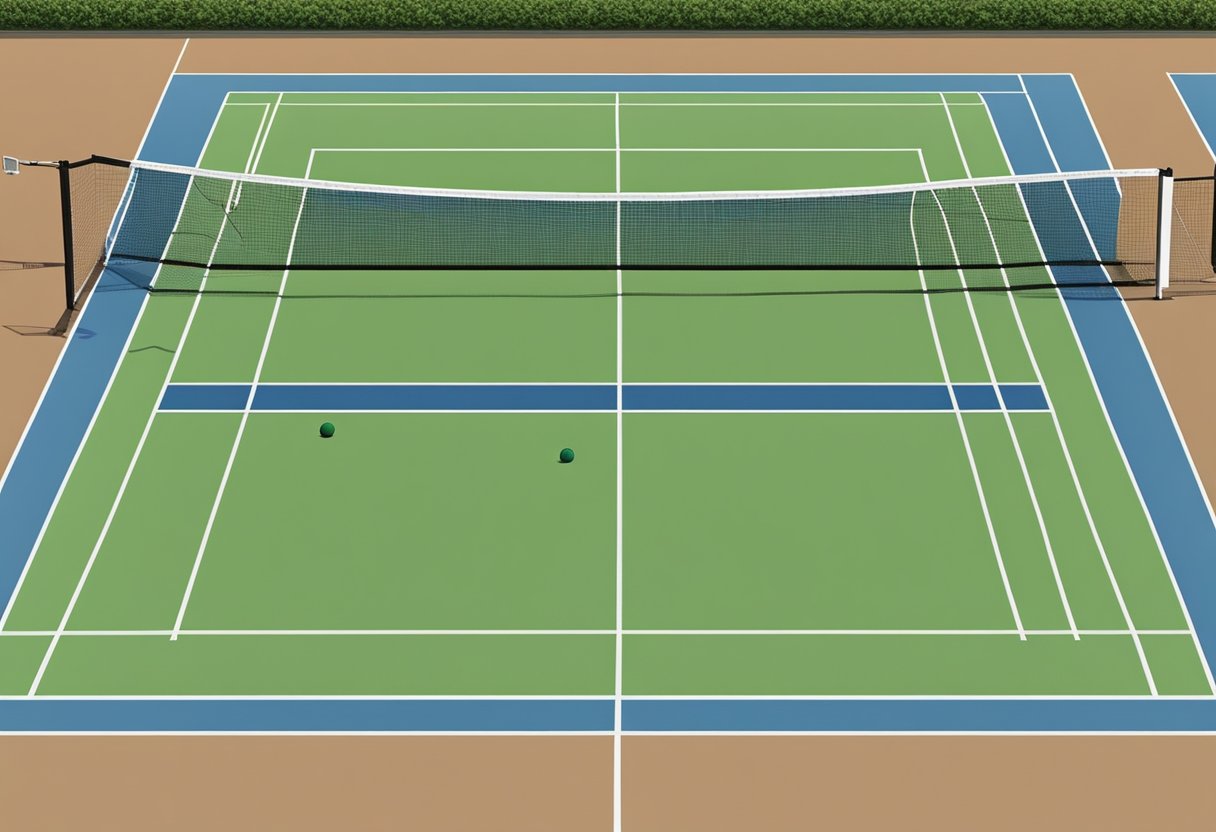
The net height, crucial for gameplay, is 36 inches at the sidelines, dipping slightly to 34 inches in the center, fostering a unique playing experience.
Maintenance and Care
Maintaining your pickleball court, indoor or outdoor, is crucial to ensure a safe and enjoyable playing experience. Regular maintenance helps preserve the quality of the playing surface and extends its lifespan.
Routine Cleaning: Dust, debris, and leaves can affect the surface quality. For outdoor courts, use a leaf blower to remove such materials quickly. Indoors, a soft-bristled broom will suffice for daily cleaning.
Surface Inspection: Periodically check your court for any cracks or damage. Weather elements can cause wear on outdoor surfaces, necessitating prompt repairs to prevent further damage. Indoor courts typically require less frequent repair due to controlled conditions.
Net Care: Ensure the net is taut and in good condition. Inspect and repair any tears or fraying. A well-maintained net is crucial for accurate play.
Equipment: Have the following tools on hand:
- Broom or leaf blower
- Pressure washer (for stubborn stains)
- Crack repair kit
- Court line tape
Seasonal Attention: Outdoor courts require different maintenance efforts depending on the season. Addressing moisture accumulation during winter and clearing vegetation overgrowth in the summer is key to maintaining an outdoor court’s integrity.
Preventive Measures: Apply a sealant to the surface every few years to protect against weathering, and consider full resurfacing if you observe significant wear.
Following these maintenance and care guidelines, you can keep your pickleball court in excellent condition, ensuring many years of enjoyable and safe play.
Guidelines for Conversion
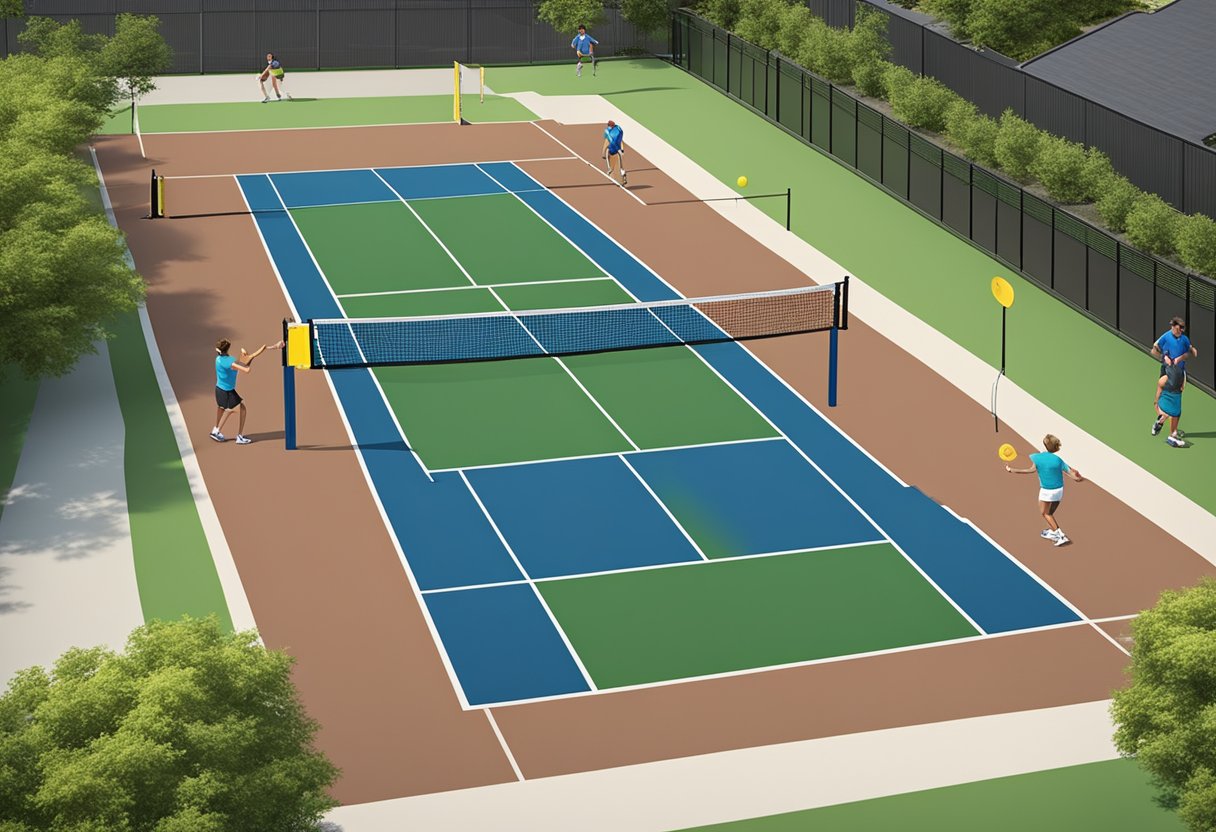
The size and layout are critical when converting existing courts to pickleball courts. Specifically, for badminton and tennis courts, the conversion process must respect the nuanced dimensions of pickleball play.
Tennis Courts: These are the most common for conversion. The good news is that you can often fit four pickleball courts on a single tennis court. The standard pickleball court measures 20 feet in width by 44 feet in length.
- Lines: Tape or paint lines according to pickleball standards.
- Net Height: Adjust the tennis net to a pickleball height of 36 inches at the sides and 34 inches in the middle.
- Surface: Ensure the surface is flat and smooth.
Badminton Courts: Although smaller, they can be converted with similar guidelines regarding line adjustments and net height but may accommodate fewer courts.
For both permanent and temporary conversions, consider the following:
- Permits: Check local regulations for modifying existing courts.
- Shared Use: Ensure the court can return to original sports without damage.
- Equipment: Temporary nets and portable lines can be used for a non-permanent setup.
Here is a basic checklist:
- Measure the existing space.
- Mark pickleball court lines (consider using temporary chalk or tape for a non-permanent conversion).
- Adjust the net or install a temporary net.
- Ensure a non-slip surface suitable for pickleball.
For comprehensive insights into the transformation process, delve into pickleball court conversion techniques. Review the Regulatory Guidelines and Permits for Pickleball Court Conversion if contemplating a professional conversion.
Addressing Common Confusions
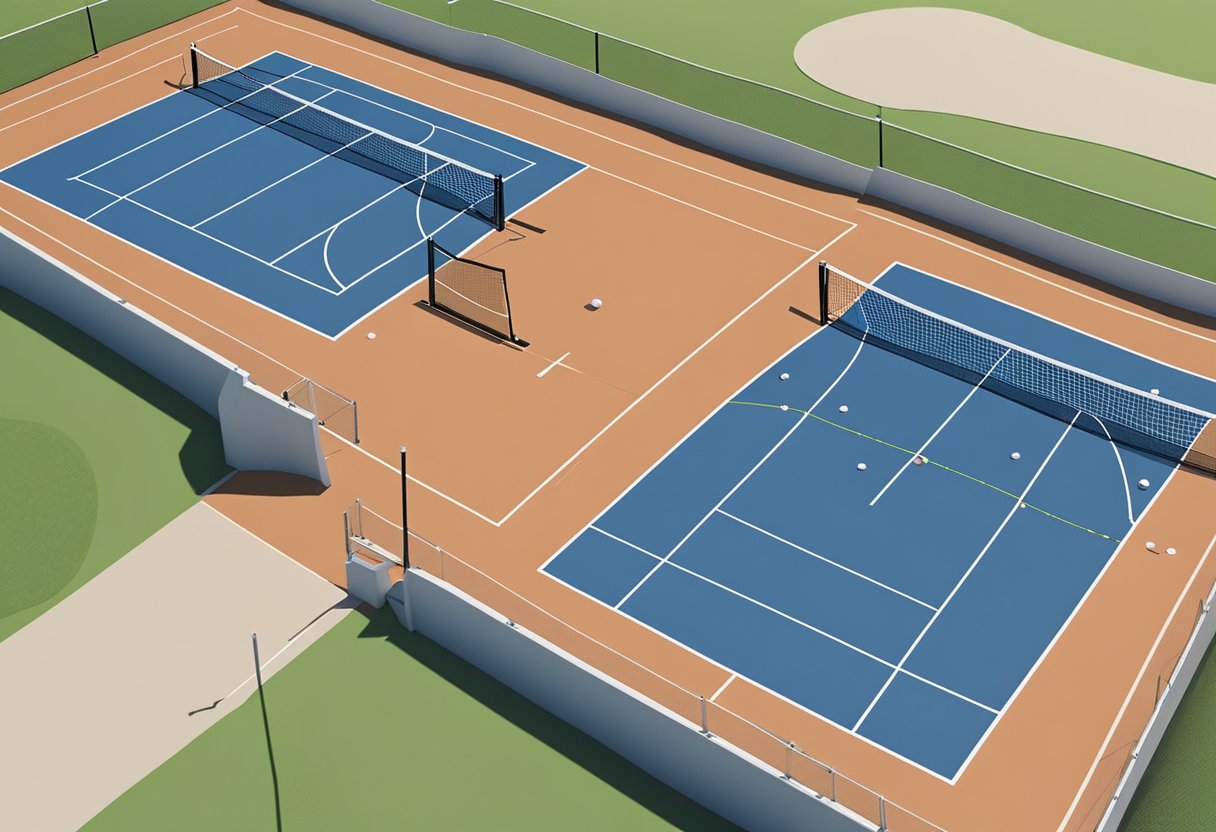
When discussing the dimensions of a pickleball court, you may encounter some uncertainties or misinterpretations of the rules and regulations.
To clarify:
Court Size: Your court should measure precisely 44 feet in length and 20 feet in width, suitable for both singles and doubles. This size is detailed in the official pickleball rules. Refer to the Complete Guide to Pickleball Court Dimensions for a visual guide.
Playing Areas: The court is divided into several areas, including the service areas and the Non-Volley Zone, which spans 14 feet across the middle. Each side of the Non-Volley Zone, known as the ‘kitchen,’ is 7 feet long. Confusion often arises about the function of these spaces; they are precisely defined for strategic play.
Lines: The distinct lines marking the sections of the court are to be 2 inches wide. Common misconceptions include overlooking the importance of these lines’ visibility and accuracy, which are crucial for fair play.
Surface: Various smooth, flat surfaces, including asphalt, concrete, and specialized sports tiles, are appropriate for a pickleball court. Misunderstandings may occur around surface suitability, so ensure your choice complies with pickleball court construction standards.
Net Height: The net should be 36 inches high at the sidelines and 34 inches in the middle. Incorrect net height can significantly affect gameplay, so following these specifications is essential.
Understanding these key elements will help you navigate and enjoy playing pickleball while adhering to the rules. Remember always to cross-check any uncertainties against the official rulebook to maintain the integrity of the game.
Advisory and Best Practices
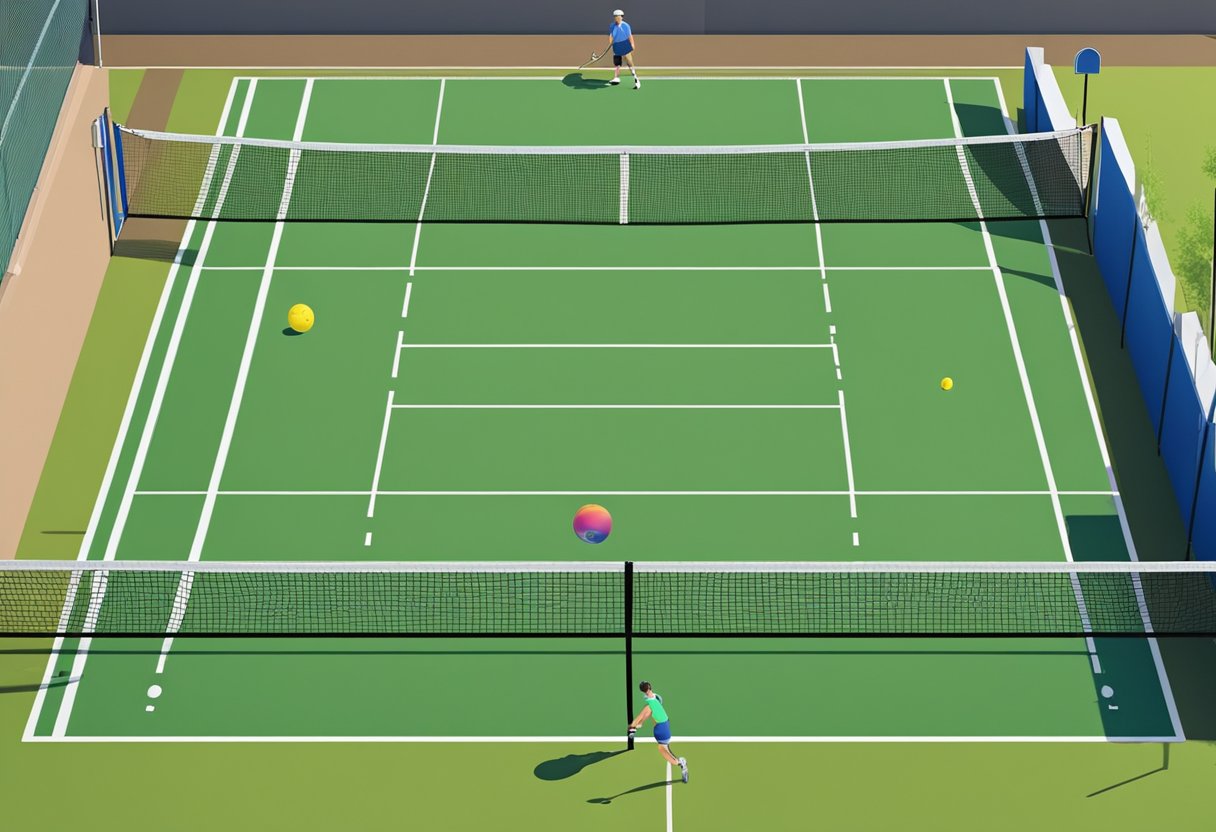
When constructing your pickleball court, selecting the appropriate surface is crucial. Asphalt and concrete are the most common choices due to their durability and smooth finish. For indoor courts, carpeted surfaces or sports court tiles are advisable. Always ensure the surface is flat and smooth to avoid play interruptions and potential injuries.
Maintenance: Regular maintenance is essential to extend your court’s life. Sweeping the surface to remove dirt or debris and checking for cracks or damage periodically helps keep the court in top condition. Seasonal maintenance, particularly for outdoor courts, can involve resurfacing or repainting lines.
Best Practices:
- Dimensions: Adhere to the official dimensions of a pickleball court, which are 20 feet wide by 44 feet long. This ensures a consistent playing experience.
- Orientation: Ideally, position your court north-south to minimize sun interference.
- Net installation: Ensure the net height is 36 inches at the sidelines and 34 inches in the center as per regulations.
Here are additional tips to consider:
- Drainage: Incorporate a slight slope to prevent water accumulation on outdoor surfaces.
- Color Contrast: Use different colors for boundary lines and the court area to improve visibility.
- Accessibility: If possible, include enough room around the court for players to move freely and spectators to watch comfortably.
Remember always to follow manufacturer guidelines during construction and seek professional advice if you encounter issues beyond your expertise. This will help you to achieve the best possible pickleball court that is safe, functional, and enjoyable for all players.
Frequently Asked Questions
This section will provide precise information answering common inquiries about pickleball court dimensions and requirements.
What are the standard dimensions for a regulation pickleball court?
A regulation pickleball court measures 20 feet in width and 44 feet in length. These dimensions mirror those of a doubles badminton court.
Is it possible to adapt a tennis court to accommodate pickleball play, and if so, how?
Yes, you can adapt a tennis court for pickleball by adding lines for the smaller dimensions. Typically, you can fit four pickleball courts on one tennis court area.
What are the specific line measurements for a pickleball court?
The court is outlined by lines that are 2 inches wide, with a non-volley zone, or ‘kitchen,’ extending 7 feet from the net on both sides, and a centerline dividing each team’s service areas.
What is the recommended amount of space needed around a pickleball court for optimal play?
For optimal play, it is recommended that there should be an additional space of at least 10 feet on each end of the court and 5 feet on the sides, totaling approximately 30 by 60 feet of space.
Can pickleball be played indoors, and what is the minimum ceiling height required?
Pickleball can be played indoors, and the minimum ceiling height recommended is 18 feet to prevent obstructions during play.
What are the ideal surface specifications for constructing a pickleball court?
The ideal playing surface should be smooth and flat with good traction and minimal abrasiveness. Asphalt or concrete are commonly used materials, with acrylic surfacing to finish the court and enhance playability.


Leave a Reply