

Combining elements of tennis, badminton, and ping-pong, Pickleball is a fast-paced, easy-to-learn game capturing the hearts of sports enthusiasts of all ages. You play with a solid paddle and a plastic ball with holes, often on a court similar in dimensions to a badminton court. The net is placed at a height of 34 inches at the center, slightly lower than a tennis net.
In this post, we’ll delve into the fascinating origin of Pickleball, uncover the story behind its unique name, and explore the remarkable rise of this addictive game. Whether you’re a seasoned player or a curious newcomer, prepare to be captivated by the evolution of Pickleball from a backyard pastime to a global sensation.

Table of Contents
Affiliate Disclaimer
As an Amazon Associate I earn from qualifying purchases. As an affiliate, we also get commissions for purchases made through links on this website from other third parties.
What is Pickleball?
Origin:
- Invented: 1965
- Location: Bainbridge Island, Washington, USA
Equipment:
- Paddle: Solid, resembling a larger table tennis racket
- Ball: Perforated, lightweight plastic
- Court: 20 feet by 44 feet; includes a 7-foot non-volley zone (the “kitchen”)
Game Play:
- Singles or Doubles: You can play one-on-one or with a partner, like tennis.
- Serving: Underhand and diagonally to the opposing service court
- Scoring: Typically played to 11 points, win by 2
The game has simple Pickleball rules that you can quickly learn, making it accessible for players of all ages and Pickleball skill levels. Pickleball’s popularity has soared in the last several years, with communities worldwide embracing the sport.
Why “Pickleball”? The game’s quirky name spawns from two possible stories. The first attributes it to the creator’s dog, Pickles, who would chase stray balls. Another theory links it to the “pickle boat” in rowing, where the term derives from a boat with a mixed crew. Discover more about the history here.
Whether you’re looking for competitive play or a fun way to exercise, pickleball provides an excellent option with its combination of strategic play and physical activity.
You can learn more about the health benefits in my post on cardio benefits of Pickleball.
History and Origins
Pickleball has a history that combines elements of badminton, table tennis, and tennis. Its creation dates back to the mid-1960s on Bainbridge Island, Washington, with a unique story behind its name. Pickleball has grown substantially since its inception, becoming a popular pastime across the United States.
Inventing Pickleball
Pickleball was invented in 1965 by three friends: Joel Pritchard, Bill Bell, and Barney McCallum. Your initial introduction to the sport began on Bainbridge Island, where they sought to create a game their families could enjoy together. They started with badminton, but lacking the proper equipment, they improvised, using a wiffle ball, and fabricated their paddles out of plywood, establishing the framework for pickleball.
Naming the Sport
Contrary to popular myth, the name “pickleball” did not come from Joan Pritchard’s assertion that the combination of different sports reminded her of the pickle boat in crew where oarsmen were chosen from the leftovers of other boats. Instead, it’s said to be named after the Pritchards’ dog, Pickles, who would chase the ball during their games. Whether the game was named after the term in rowing or the family dog, the name “pickleball” has undoubtedly stuck.
First Pickleball Game
The first pickleball game unfolded in the backyard of Joel Pritchard, where the basic rules were laid out, drawing heavily from existing racket sports. Washington State became the birthplace of what would evolve into a sport played by people of all ages. Since its beginnings, pickleball has spread from a local pastime to a sport with official organizations, structured tournaments, and a growing global community.
Pickleball Equipment
When you step onto a pickleball court, having the right equipment is crucial for performance and adhering to the sport’s regulations.
Pickleball Paddles
Your pickleball paddle is a primary piece of equipment. Typically made of composite or graphite materials, it’s smaller than a tennis racket but larger than a ping-pong paddle. The optimal paddle should balance power and control to complement your playstyle.
The Pickleball Net
The net splits the court into two equal areas and is a vital setup component. It stands at 34 inches at the center and extends to 36 inches at the sidelines. Ensure it’s secured firmly to avoid disruptions during play.
Pickleball Ball Types
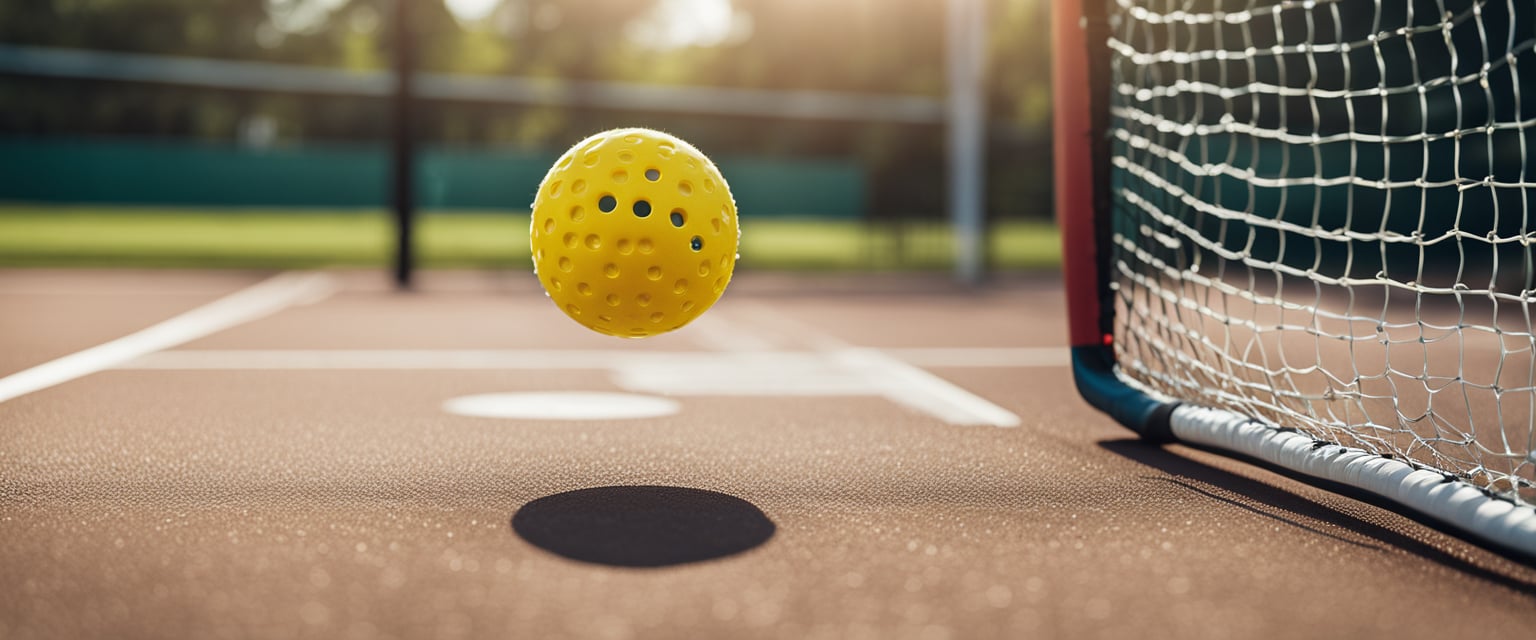
Pickleball balls are distinctive: think wiffle balls, but tougher. Outdoor balls are heavier and have smaller holes to counteract wind, while indoor balls are lighter with larger holes for better maneuverability on a smooth court surface. Always choose the ball suited for your playing environment for the best experience.
Playing the Game
Pickleball combines elements from tennis, badminton, and table tennis to create a unique and rapidly growing sport. You’ll play on a court with specified dimensions using a paddle and a perforated plastic ball, adhering to clearly defined Pickleball rules that govern gameplay, scoring, and officiation.
Gameplay Rules
Pickleball is played as singles (one player per side) or doubles (two players per side), aiming to serve the ball and win points through a rally. The serve must be underhand, and the ball must land in the opposite diagonal court. After the serve, players must let the ball bounce once before volleys can begin. The non-volley zone or ‘kitchen’ is an area on the court close to the net where you’re prohibited from volleying the ball, preventing “spiking.” Faults occur for various infringements, such as hitting the ball out of bounds, not clearing the net, or volleying in the non-volley zone.
Court Dimensions and Layout
The pickleball court is a rectangle measuring 20 feet wide by 44 feet long, including lines for the non-volley zone that extend 7 feet from the net on each side. The net is 36 inches on the ends and 34 inches at the center. The court layout is similar to that of tennis but with modifications to accommodate the unique gameplay of pickleball.
| Feature | Dimension |
|---|---|
| Court Width | 20 feet |
| Court Length | 44 feet |
| Non-Volley Zone | 7 feet from net |
| Net Height (Ends) | 36 inches |
| Net Height (Center) | 34 inches |
Scoring and Officiation
Scoring in pickleball can only be done by the serving side, and games are typically played to 11 points, win by 2. Points can be won when the opponent commits a fault. Matches are officiated to ensure the rules are followed, with a referee managing disputes, keeping score, and calling faults. In recreational play, players often self-officiate, making calls on points and keeping track of the score.
Pickleball Growth and Popularity
Pickleball has seen a remarkable surge in popularity, particularly in the United States, where it has its roots. Your understanding of this sport will deepen as you explore its U.S. expansion, international reach, and cultural impact.
Pickleball in the United States
Pickleball, a sport combining tennis, Ping-Pong, and badminton elements, originated in Seattle in 1965. It has grown significantly, especially in the last decade, with the USA Pickleball Association (USAPA) reporting a nearly 40 percent increase in participation from 2019 to 2021. This makes pickleball one of the fastest-growing sports in America. Numerous tournaments, including those run by Major League Pickleball, underscore the sport’s competitive fervor nationwide.
- Growth: Reports suggest an increase from 4.8 million players in 2021, revealing pickleball’s widespread appeal.
- Tournaments: The USAPA sanctions over 2,000 tournaments annually, including the U.S. Open Pickleball Championships.
Pickleball Around the World
Pickleball’s popularity isn’t limited to the United States; it’s becoming a global phenomenon. The International Federation of Pickleball (IFP) is the sport’s global governing body, overseeing the sport’s rules and promoting international competition. Pickleball is making strides on every continent, with countries hosting their tournaments and leagues, pivotal in driving international recognition and success.
- IFP Membership: The IFP has seen an increasing number of member nations, a sign of pickleball’s expanding international footprint.
- Global Tournaments: Events like the Bainbridge Cup further international competition, attracting players worldwide.
Influence on Sport and Culture
Pickleball’s influence stretches beyond the court, impacting sport and culture. Pickleball is considered an inclusive activity suitable for all ages, contributing to its widespread popularity and social value. Discussions around pickleball even hint at its future inclusion in major sporting events, like the Olympic and Paralympic Games, due to its accessibility and fast-growing community.
- Inclusivity: Its appeal to a broad demographic makes pickleball a unifier and a staple in community centers and sports clubs.
- Cultural Impact: As the sport grows, its cultural relevance does as well; pickleball is increasingly referenced in media and popular culture.
Organizations and Governing Bodies
In pickleball, several organizations play pivotal roles in governing the sport, establishing rules, and organizing tournaments. These bodies are integral to the sport’s structure and offer resources for players of all levels.
USA Pickleball Association
As the sport’s national governing body in the U.S., the USA Pickleball Association (USAPA) oversees all aspects of the game domestically. Founded in 1984, USAPA sets the official rules and sanctions for tournaments and drives the sport’s expansion. This non-profit 501(c)(3) corporation also aids in developing grassroots programs that help introduce pickleball to new players.
International Regulatory Organizations
On a global stage, entities like the International Federation of Pickleball (IFP) ensure the standardization of rules across different countries. The IFP plays a critical role in the sport’s international growth and presides over member organizations, ensuring the sport retains a unified structure worldwide.
Tournament Organizations
Pickleball tournaments testify to the sport’s competitive spirit and growing popularity. Events like the U.S. Open Pickleball Championships provide a stage for players to compete at the highest levels. These tournaments encourage player development and contribute to the sport’s visibility and the ongoing dialogue about its regulation and structure.
Each organization contributes to the sport’s ongoing success, whether at a neighborhood court or an international championship.
Diversity and Inclusivity
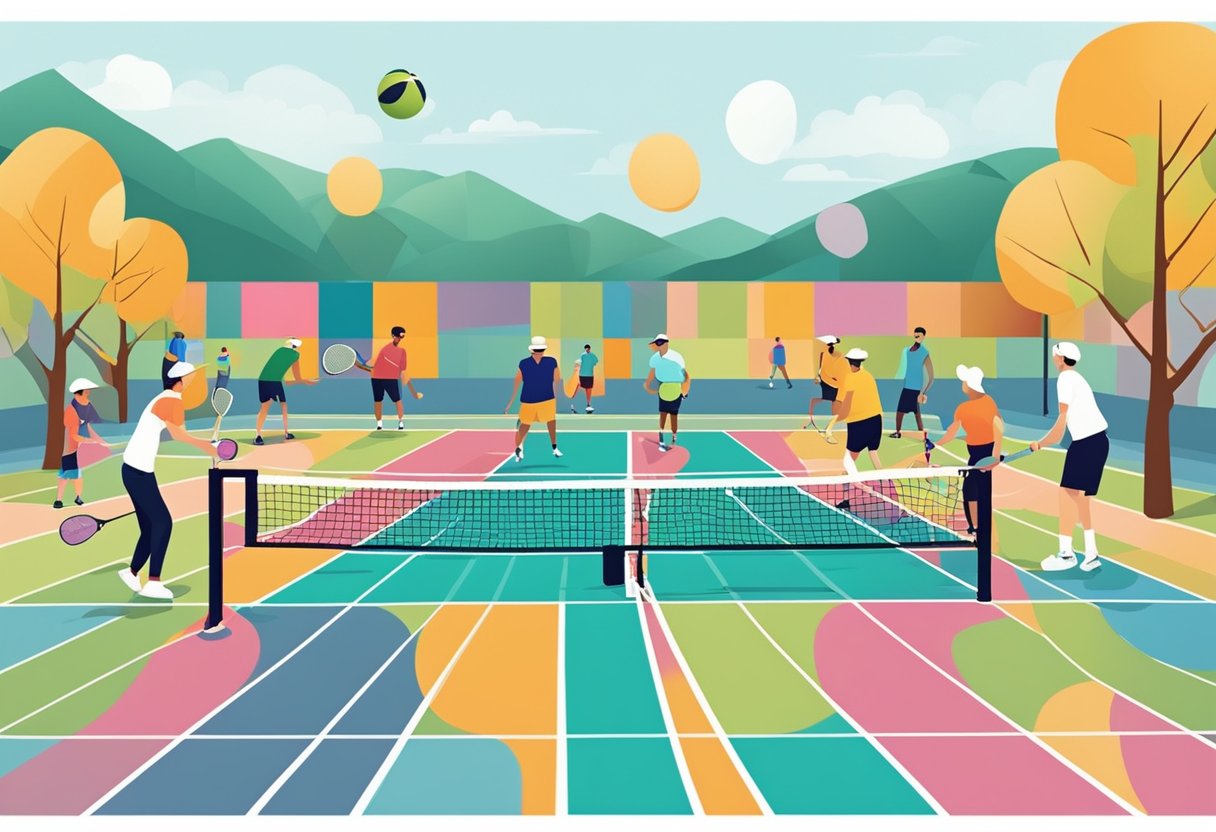
Pickleball stands as a beacon of diversity and inclusivity within sports. It offers opportunities for players across a spectrum of age groups and skill levels, ensuring that everyone from children to seniors can participate. This inclusivity contributes to individuals’ and communities’ physical and social well-being.
Age and Skill Level Considerations
You might find pickleball appealing due to its unique ability to transcend age barriers. Children, adults, and the elderly can all participate in the game, with rules and equipment adaptable to varying Pickleball skill levels. Leagues and recreational play often feature categories for different age groups and abilities, ensuring a welcoming environment for all age groups.
- Beginners: Easy-to-learn rules
- Intermediate Players: Opportunities for skill advancement
- Advanced Players: Competitive play and strategies
Adaptive Sports and Accessibility
Pickleball prides itself on being accessible to those with physical disabilities through adaptive sports programs. These adaptations might include modified equipment or specialized court dimensions that provide a viable sporting option. As a result, individuals with disabilities find pickleball a fitting choice, embodying the principles of inclusivity and accessibility.
- Wheelchair Pickleball: Custom rules and court setups
- Specialized Equipment: Paddles and balls for more manageable handling
Pickleball promotes physical activity and fosters a sense of community and belonging by incorporating considerations for various skill levels and ensuring adaptive measures for those who need them.
Equipment Evolution and Technology
In pickleball, both your paddles and the balls have undergone significant improvements thanks to the ingenuity behind equipment-related technological advancements. These updates have enhanced your gameplay experience by offering better control and durability.
Developments in Paddle Construction
Your paddle is the cornerstone of pickleball equipment; its evolution is crucial to the game’s growth.
Initially, pickleball paddles were simple wooden pieces, but today, they boast high-tech composite materials for increased performance.
Composite paddles blend lightweight and sturdiness, typically utilizing a mix of fiberglass, carbon fiber, or graphite. This innovative use of materials gives you a balance between power and control that was impossible with earlier wooden models.
Brands like Onix have been instrumental in introducing paddles that cater to both beginner and advanced players, focusing on improving the quality of your strokes and overall efficiency on the court.
Advancements in Ball Design
Your pickleball wouldn’t be complete without the ball, and like the paddles, there have been significant advancements in ball design.
Ball technology has evolved to ensure better flight stability and bounce consistency. With larger holes and softer construction, the traditional indoor ball is now complemented by outdoor variants such as the durable Dura ball, crafted to withstand rougher play surfaces and variable weather conditions.
These outdoor balls have smaller, symmetrical holes, allowing for precision and a more consistent bounce on diverse court types.
These technological advancements have been essential in elevating pickleball from a backyard pastime to a sport with equipment tailored for every environment.
Controversies and Challenges
While the sport of pickleball offers fun and engagement, it has not been without its controversies and challenges, particularly in terms of equipment standards and court usage conflicts.
Debates over Equipment Standards
Paddles and Balls: You might encounter debates over the appropriate standards for pickleball equipment. The material and design of paddles can greatly affect play, and the USAPA sets specific guidelines to maintain fairness. Balls, likewise, must meet certain bounce and hardness criteria. However, manufacturers and some players often push for variants that challenge these standards, leading to controversies within the sport’s community.
Pickleball Court Conflicts
Access and Noise: Disputes over court access might impact Your enjoyment of pickleball. As more people play, demand for courts has increased, leading to conflicts with other sports teams and park users.
Moreover, noise generated from the game has resulted in neighbor disputes, especially in residential areas close to courts, pitting communities against avid players and sometimes escalating to legal challenges.
Business Interests: The rising popularity of pickleball has drawn business interests, with some aiming to capitalize on new court developments. This can lead to clashes over public space usage, where business priorities might contend with community accessibility concerns.
Pickleball and Health
Playing pickleball can be an excellent way to boost your physical activity level. As a moderate-intensity exercise, it demands both aerobic stamina and quick bursts of energy. Here’s how your health can benefit when you regularly hit the pickleball court:
- Aerobic Conditioning: Playing pickleball increases your heart rate, improving cardiovascular health and endurance.
- Flexibility and Balance: The sport’s fast-paced nature requires swift changes in direction, contributing to better joint flexibility and balance.
- Muscle Strength: Regular play can strengthen the arms, legs, and core muscles due to the constant movement and ball striking.
- Weight Control: Pickleball can burn adequate calories, assisting in maintaining or achieving a healthy weight.
When considering the specific health perks of pickleball they include:
- Increased Agility: You’ll sharpen your reflexes as you quickly react to the game’s pace.
- Hand-Eye Coordination: Striking a ball with precision fosters better coordination.
- Social Interaction: Playing doubles or participating in a pickleball community can enhance mental well-being through socialization.
As with any physical activity, it’s crucial to listen to your body and consult a healthcare provider before starting a new exercise regimen, especially if you have pre-existing health conditions. Remember, the key to reaping the full health benefits of pickleball is consistent and safe play.
Frequently Asked Questions
In this section, you’ll find specific details addressing common curiosities about pickleball, from its peculiar name to its playing rules and historical journey.
What is the origin of the name ‘pickleball’?
The name ‘pickleball’ has a rather whimsical origin. It is widely believed to be named after ‘Pickles,’ the family dog of co-inventor Joel Pritchard, who would chase stray balls and thus had a hand, or rather a paw, in naming the sport. Another less popular theory suggests it might relate to the term ‘pickle boat,’ referring to a boat with a mixed crew, similar to the sport’s combination of other games’ elements.
How was pickleball invented, and who were its founders?
Pickleball was invented in 1965 on Bainbridge Island, Washington, by three fathers—Joel Pritchard, Bill Bell, and Barney McCallum—to entertain their children. They aimed to create a game that would be fast-paced and easy to learn, utilizing elements from existing racket sports.
What are the main rules and objectives of the pickleball game?
The objective in pickleball is similar to tennis: players aim to win points by striking a perforated plastic ball over a net and making it unreturnable within the proper court boundaries. The main rules include serving underhand, starting from the right service square and alternating each serve, and following a double-bounce rule where the ball must bounce once on each side before volleys are allowed.
What two sports combine to form the basics of pickleball?
Pickleball is a hybrid sport that combines elements of badminton and tennis. It is played on a badminton-sized court with a modified tennis net. Players use solid paddles to hit a ball over the net, similar to tennis but with unique pickleball-specific variations.
Why has pickleball gained popularity in recent years?
Pickleball’s recent surge in popularity can be attributed to its easy-to-learn nature, suitability for all ages and skill levels, and social aspect, which emphasizes fun and camaraderie. Its lower impact on the body than other racket sports has made it a favorite among older athletes.
Can you describe the historical development of pickleball?
Since its inception in 1965, pickleball has steadily evolved. The game started catching on in the Pacific Northwest and gaining a more formal structure when its official rulebook was published in 1984. It is now overseen by organizations like the USA Pickleball Association, which promotes the growth and development of the sport across America.


Leave a Reply